
 Drain Blockage: 9 Hidden Causes Bangalore Homes Must Know
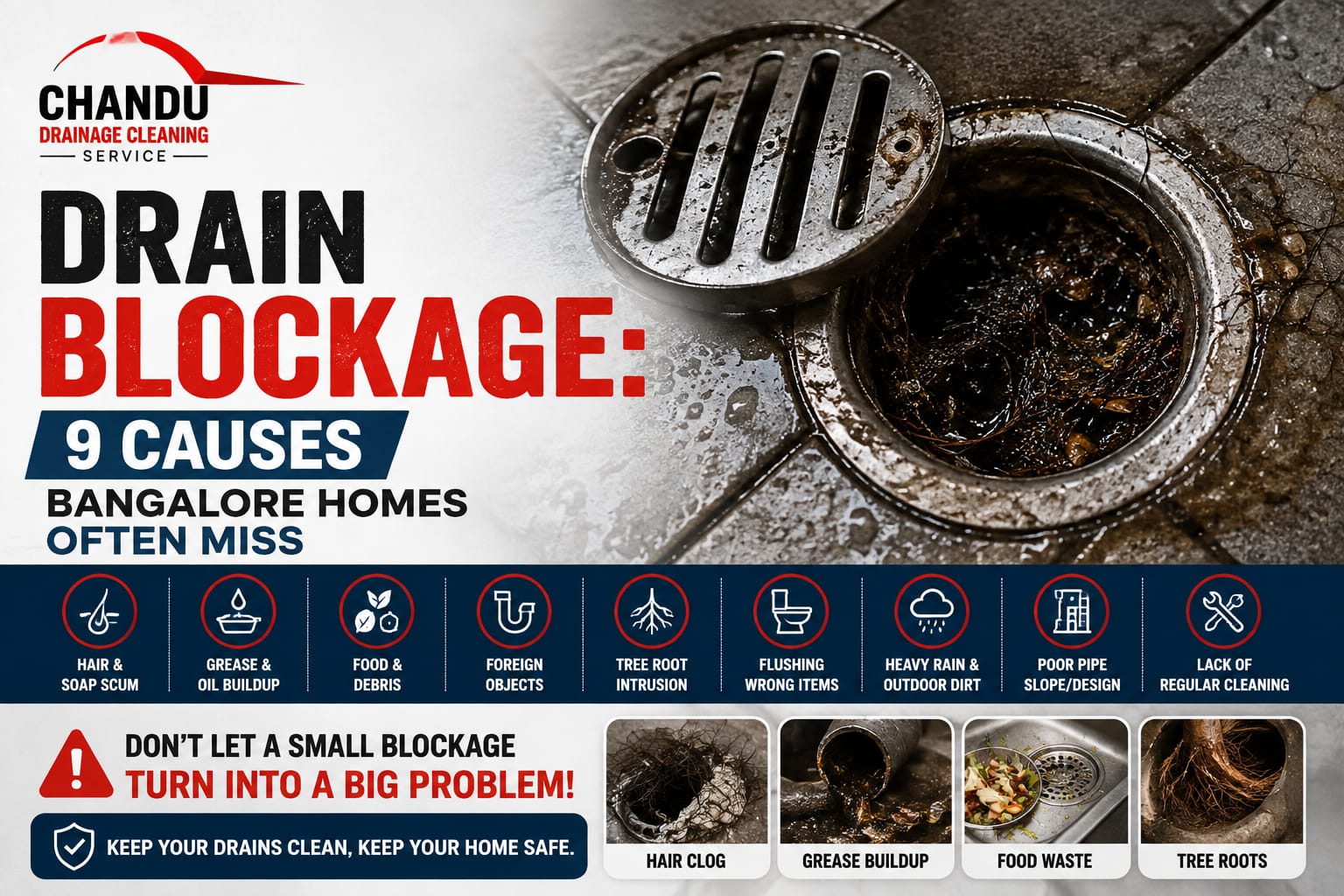 Drain Blockage: 9 Hidden Causes Bangalore Homes Must Know
A recurring overflow or a slow flow in your drain can be more than just an irritation. Drain blockage is often an indication that there is a problem deeper inside your drainage system. Most homeowners try to apply simple solutions to recurring blockage, when the problem usually has an underlying cause.
In Bangalore homes, drain blockage can arise from grease, silt, tree roots and broken pipes. Identifying the warning signs can help you take the appropriate measures to prevent a small problem from becoming a serious drainage issue.
1.Grease and Food Deposits in Kitchen
Kitchen sinks are the most common site of drainage problems. Cooking oil, grease and food scraps can clog your drainage system. As more deposits accumulate on the inside walls of the pipe, the flow of wastewater will become slow.
While throwing away hot water can help, heavy deposits of grease will require proper cleaning.
2. Hair and Soap Deposits in Bathrooms
Hair, soap deposits and other materials can combine together and cause a stubborn blockage. This can result in a slow drain and water backing up.
Using a cover and removing visible hair can help prevent this type of blockage.
3. Silt Inside Drainage Pipes
Mud, sand, leaves, silt and other materials from the outside can get stuck in the drainage system during heavy rains. This can slow down the water flow through the drain.
A gradual accumulation can cause an overflow if the material is not removed. Outdoor drains need special attention, especially during the rainy season.
4. Tree Roots Entering Underground Pipes
Tree roots seek out sources of moisture underground. As a result, they may find their way into broken or damaged pipes. This can cause the wastewater flow to become slow and obstructed.
If the same site begins to repeatedly block despite cleaning, tree root intrusion could be a possible cause.
5. Damaged or Broken Pipes
Not all drainage issues can be resolved by simply removing the blockage. Cracked, damaged or displaced pipes can still cause slow flow and wastewater blockage.
If the water returns within a while of cleaning, the problem could be a damaged pipe. Identifying this earlier can prevent a more extensive repair.
6. Cement and Construction Materials
Cement, sand, plaster and other construction materials should not be dumped inside drainage lines. Hardened materials that get stuck in a drainage pipe can cause a stubborn blockage.
Properties undergoing renovation should take special care to not allow construction materials to enter the sinks or external drainage points.
7. Improper Disposal of Waste
Sanitary products, wipes, plastic, diapers and other inappropriate materials can cause serious drainage problems. Flushing such material down the drain can allow them to collect inside the pipe and further block the flow.
Proper disposal of waste is one of the simplest ways to reduce the risk of having a water blockage.
8. Obstruction in the Main Sewer Line
Sometimes the problem can be bigger than just one bathroom or kitchen sink. If several drains are obstructed, it could be due to the main drainage or sewer line.
A blocked sewer can prevent wastewater from flowing freely, which can cause the water to back up. If several drains are simultaneously slow moving, smell of sewage or wastewater is present, or the flow returns after cleaning, it might be an issue with the main line.
9. Poor Drainage Maintenance
Waiting for water to overflow can turn into a big problem. Maintaining your drainage system by allowing professional cleaning can remove the accumulation of grease, silt, hair and construction materials before they become a stubborn blockage.
Older properties with drainage systems may also benefit from periodic professional cleaning and inspection. If a property has recurring drainage blockage problems, it will be important to take this to a professional.
Table of Drainage Problems and Possible Causes
| Drainage Problem | Possible Cause | Recommended Action |
| Slow kitchen drainage | Grease and food deposits | Professional drain cleaning |
| Slow bathroom drainage | Hair and soap buildup | Remove deposits and inspect |
| Outdoor drain overflow | Silt, leaves or debris | Drainage cleaning |
| Repeated obstruction | Roots or damaged pipes | Professional inspection |
| Several drains backing up | Main line obstruction | Sewer line cleaning |
| Persistent sewage smell | Waste buildup or sewer issue | Cleaning and inspection |
How to Prevent Recurring Drain Problems
Simple maintenance can go a long way in reducing drainage issues. Avoid using hot water to dispose of cooking grease and oil. Using covers can prevent hair and solid waste from entering the pipes.
Leaves, mud and construction materials should be kept out of the outdoor drainage area. If you have a property that regularly experiences drain blockage, it is important to investigate the underlying cause rather than repeatedly applying temporary solutions.
Using chemical drain cleaners should also be done sparingly. Using them frequently or inappropriately can damage some pipe materials and fail to resolve more serious blockages. Professional drain cleaning may be recommended in some cases for deep cleaning and better drainage performance.
When Should You Call a Professional?
Professional assistance may be required when there is continual accumulation of wastewater, several drains becoming slow, persistent smells of sewage, or a drain blockage returning after cleaning.
A blocked sewer may need a specialized assistance to determine the extent of the problem. It might have originated from silt, tree roots, accumulation of waste or damaged pipework.
The goal should not only be to remove the obstruction, but to find out the reason for the water blockage and how to prevent future recurrence.
Frequently Asked Questions
1. What are the most common causes of drain blockage?
The most common causes of drain blockage include grease, hair, soap, food, silt, tree roots and inappropriate materials in addition to damaged or defective pipes.
2. Can water blockages cause sewage backups?
Yes. Water blockages can cause water or sewage backups in other connected drains due to the fact that they are interconnected.
3. How can I avoid a blocked sewer?
You should avoid disposing of unwanted materials in the drains. Additionally, you should ensure that your drainage chamber is free from debris and arrange for regular cleaning. You should also consider contacting professional cleaners.
4. Why does my drain block again after cleaning?
Your drain may be experiencing multiple blockages since the initial blockage was not the main cause of the problem. The secondary causes of blockages include grease, tree roots, silt, damaged pipes or a blockage further along the pipe.
5. When should I call a professional cleaning service?
You should consider professional drainage cleaning service if your drains are regularly blockage, backups of wastewater, multiple drains are draining slowly and persistent unpleasant sewage odours
6. Is a blocked sewer different from a blocked drain?
Yes. They are different since a blocked sewer is likely to cause multiple drains to back up while a blocked household or home drain is likely to affect a single fixture. In addition, multiple drains backing up is an indication of a blocked sewer and not a single household drain.
Why does my drain keep blocking after cleaning?
A drain can keep blocking due to the same underlying cause. Grease and food deposits, silt, tree roots, broken pipes, or a problem with the main sewer line can be at fault. If a drain repeatedly blocks after cleaning, it will be important to determine the underlying issue to identify the right cleaning or repair method.
Conclusion
A recurring overflow or slow flow in your drain is not always an isolated household problem. A drain blockage could have an underlying cause inside an individual pipe, underground, or inside the main sewer line.
Recognising the early signs of slow drains, foul smell, repeated blockage and water overflow can help you prevent more serious issues. If several drainage points are affected together, a blocked sewer may require professional attention.
Need help with recurring drainage problems?
Contact Chandu Drainage Cleaning for professional drainage cleaning and blockage solutions in Bangalore.