
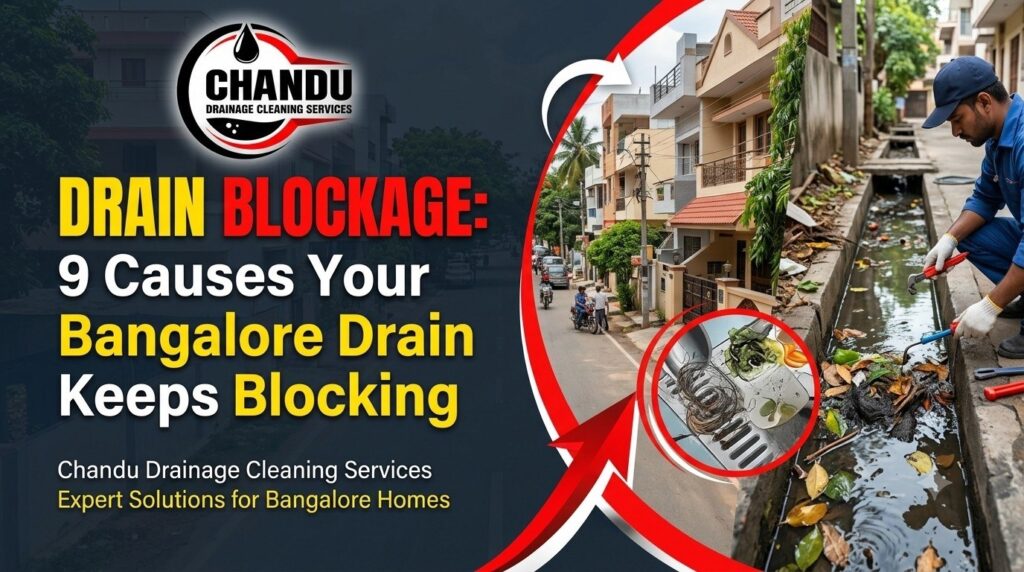
Drain Blockage: 9 Causes Your Bangalore Drain Keeps Blocking
A drain blockage that keeps on happening can be an absolute bother. Whether it be slow draining, unpleasant sewage smells, backed-up water or frequent blockage itself, there are several problems that can be brought about by a faulty drainage system – and it’s not always something you can fix at home.
Homeowners in Bangalore may be plagued by grease, food, hair, silt, tree roots, broken pipes, inappropriate waste disposal and several other causes. Let’s take a look at 9 different reasons why drains block.
1.Grease and Food Waste in the Kitchen Sink
One of the most common causes of blocked drains in the home is the kitchen sink. Grease, oil, food waste and other such materials tend to be disposed of into the sink and while they may wash away easily enough, a build-up over time can cause considerable issues
Getting rid of excess oil by pouring it down the sink may seem like a good idea, but it can lead to considerable problems later down the line – especially if there is a considerable amount of it. Not only does hot water help to break down grease, it can also make it less likely to stick to the inside of the pipe.
It is best to avoid using your kitchen sink to dispose of cooking oil and large pieces of food, but you can also invest in a sink strainer to prevent large pieces of food from getting into the drain in the first place.
2. Hair and Soap Build-Up in the Bathroom
While kitchen sink blockage is a common problem, blocked drains in bathrooms can be just as troublesome. Hair, soap scum and other bathroom waste can combine to form a blockage in the drain
If you were to look into your bathroom sink or floor drain and see that the water is disappearing slower than usual, chances are that you have a blockage forming. If the blockage isn’t dealt with, the drain will eventually stop working altogether.
To avoid having to deal with a blockage in the bathroom, consider using a drain cover and removing any excess hair that may have built up. However, if the same drain keeps on getting blocked despite regular cleaning, there may be a more serious issue with the pipes.
3. Silt, Mud and Outdoor Debris
Debris such as mud, sand and leaves can get into outdoor drains and make their way into the drainage system
This is especially common in properties that have outside drainage, which is common in areas of Bangalore. Particularly during the rainy season, drains can get backed up from the amount of muck that gets washed into them. This poses a considerable risk, as the blockage may cause water to back up and overflow.
Clearing these types of blockages can prevent a larger one from forming later down the line. Make sure to keep an eye on your external drains and clean out any blockages or debris. Avoiding excessive leaves or garden waste near external drainage is also a good idea.
4. Blockage from Tree Roots
Tree roots can be a menace to drains due to the fact that they are always searching for water to drink. If there are any cracks in the pipes or drains, tree roots can work their way into the gap and cause a blockage – or, if there are any loose joints or broken drain pipes
Tree roots growing into drains can often be the cause of a recurring drain blockage, as there is usually more than meets the eye when it comes to the issue at hand
If you feel that there is more going on with your drain blockage than what meets the eye, you should have the drains professionally inspected to see if there are any tree roots blocking the drain.
If tree roots are suspected to be causing recurring blockages, professional drain cleaning and inspection services can help identify the problem and restore proper drainage flow.
5. Broken or Damaged Drainage Pipes
It’s not always what is inside the drain that is causing the issue – sometimes, the drain itself is faulty in some way. Cracked, broken, misplaced or collapsed drainage pipes can contribute to the issue
A faulty drain can be a real nuisance to deal with, especially if the drain keeps blocking despite cleaning. Not only will broken drain pipes cause the drain to keep blocking, but it can also mean that roots and dirt can get inside the drain and cause further issues.
If you feel that there is more going on with your drain blockage than what meets the eye, you should have the drains professionally inspected to see if there are any tree roots blocking the drain.
6. Construction Materials Getting into the Drain
During construction works, materials such as cement, plaster, sand, paint, mortar and grout should never go down the drain. Some of these substances can harden inside the pipes and become extremely difficult to remove
It is best to avoid pouring any materials such as cement or plaster into the drain. If your property is currently under renovation, make sure to take appropriate measures to ensure that construction materials do not get into the drains.
7. Getting the Wrong Things into the Drain
It goes without saying that inappropriate things should not be disposed of via the drain. Flushing inappropriate substances down the toilet or sink can lead to a blockage forming – wipes, sanitary products, baby wipes, plastic, paper products and so on – not only can they get stuck in the drain, but they can also combine with other substances like hair and grease to form a bigger blockage.
It is important to dispose of inappropriate substances in the bin instead of getting rid of them via your sink or toilet. Not only do inappropriate substances like wipes combine with other substances, but they can also be very difficult to remove from the drain once they have gotten in there.
8. Sewer Line Blockage
If just one of your sinks or bathroom basins is blocked, then the issue is likely to be isolated to that specific sink or basin. If, however, several of your drains are blocked simultaneously or start backing up, the issue could be a blocked sewer line.
The same sewer line is used for different basins and sinks around the house, meaning that a blocked sewer can cause several drains to get blocked simultaneously. Signs of a blocked main sewer line may include sluggish kitchen basin drainage, backed-up bathroom drains, toilet issues and bad smells coming from the drains.
9. Lack of Proper Maintenance
Sometimes, it isn’t that there is an issue with the drain itself – it’s a question of upkeep. Many homeowners neglect their drains until the point where wastewater starts to back up and overflow.
Grease, hair, silt and other substances can build up over time and cause blockages to form. A blocked drain can usually be remedied by unblocking the drain, but drains that suffer from frequent blockage should be inspected more closely. Older properties or ones that suffer from recurring drainage issues may find it useful to get regular maintenance to prevent serious blockage from occurring.
Drains rarely block on their own – it usually requires a build-up of substances like hair or grease for a blockage to form, or inappropriate substances like wipes or cement to get stuck in the drain. Older properties and those that have frequent drainage issues can especially suffer from this. A blocked drain can usually be remedied by unblocking the drain, but drains that suffer from the issue should be inspected more closely.
The objective should not simply be to clear the drain blockage in itself, but to determine what caused it to occur in the first place – this will prevent the same drain blockage occurring again in the near future.
How Can You Prevent Drain Blockage?
Preventative upkeep can do a lot to improve the state of your drains – avoid getting grease and oil down the kitchen sink, dispose of inappropriate substances like wipes or paper products in the bin rather than in the toilet or sink and try to avoid getting any foreign substances like leaves or mud into external drains. If you are renovating, make sure to avoid getting cement, plaster or other such substances into the drains
Avoid using chemical drain cleaners as a regular occurrence – not only can they be damaging to the environment, they can also be damaging to the pipes in your home. If you are dealing with a persistent drain blockage, get in touch with a professional drainage cleaning company to clear the blockage and inspect the drain to determine what caused it.
When Should I Call a Professional Drainage Cleaning Service?
Occasional drain blockage is fairly common – it happens to most people at some point or another. If you find yourself having to deal with drain blockage repeatedly, however, it may be time to call in some professional assistance. If you experience any of the following issues, you should consider getting in touch with a professional drainage cleaning service:
- Recurring drain blockage
- Several drains getting blocked at the same time
- Wastewater backing up
- Sewer smells emanating from the drains
Frequently Asked Questions
1. Why Does My Drain Keep Blocking After Cleaning?
There may be something deeper going on, such as tree roots, silt, broken pipes or even another blockage further down the line that needs to be cleared.
2. What Are the Most Common Causes of Drain Blockage?
Some of the most common causes of drain blockage are grease and food waste, hair, silt, tree roots, broken drain pipes, inappropriate waste disposal, external leaves and debris, issues with the main sewer line and inadequate maintenance.
3. Can Several Slow-Draining Drains Be a Sign of a Blocked Sewer Line?
Yes – if several of your drains start to slow down simultaneously, it may be an indication that the main sewer line is blocked.
4. How Can I Prevent Drain Blockage?
Avoid getting grease, oil or inappropriate substances like wipes down the drain. In the kitchen, you may want to invest in a kitchen sink strainer. In the bathroom, a drain cover can be useful for preventing hair from getting into the drain. Avoid getting leaves or other debris into external drains. If you are going to be renovating, make sure that inappropriate substances like cement do not get into the drains. If you have repeated issues with blocked drains, consider getting regular draining maintenance.
5. When Should I Contact a Professional Drainage Cleaning Service?
You should contact a professional drainage cleaning service if you are dealing with recurrent drain blockage, several slow drains, wastewater backing up, sewage smells or if simple drain cleaning does not seem to be working.
Conclusion
A blocked drain should never be taken lightly. Grease, hair, silt, tree roots, broken pipes, inappropriate waste disposal, sewage blockage and lack of maintenance are some of the most common causes of drain blockage. A professional drainage cleaning service can help to clear blocked drains as well as determining what caused the drain blockage in the first place, so that it is less likely to occur again.
Need help with a recurring drain blockage in Bangalore?
Contact a professional drainage cleaning service today.