
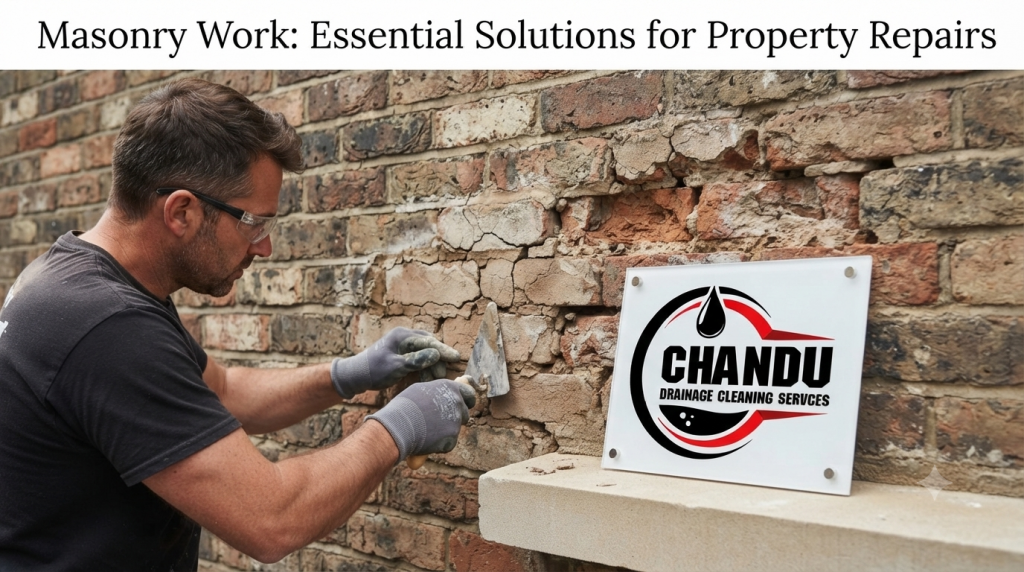
Masonry work is an important maintenance activity for residential and commercial properties. From brick wall repair and construction to drainage chamber maintenance and minor civil works, all such maintenance activities play a significant role in ensuring the property remains functional and robust.
While most people overlook this critical aspect of property maintenance, masonry work involves a variety of tasks that go beyond just building or repairing walls.
What Are the Different Types of Masonry Work?
Masonry work typically refers to construction activities involving materials such as bricks, blocks, mortar, and concrete.
Depending on the specific requirement, experienced professionals offer a wide range of masonry services, including
- brick wall construction
- brick wall repair
- chamber construction
- chamber repair
- masonry repair
- wall rebuilding
- concrete repair
- drainage repair
- minor structural and civil works
The exact work scope depends on a detailed evaluation of the structure to identify faulty or weak components.
Why Do You Need Masonry Services?
Most structures involve some form of masonry work, making the associated services eminently crucial.
This is especially true for outdoor structures that tend to be exposed to higher levels of moisture and weathering throughout their lifespan.
As a consequence, such structures may require occasional or routine maintenance to address weak spots, cracks, and other damages.
Some of the common signs that indicate the need for professional masonry services are
- cracked walls
- cracked or faulty chamber
- broken or damaged bricks
- damaged floor sections
- water-damaged masonry structures
- weakened structures around drainage
It is also important to note that these damages often begin as minor imperfections that, if left unaddressed, can severely compromise the structural integrity of the walls, chambers, and other components.
What Are the Common Applications of Masonry Work?
A drainage chamber is a critical structure that is exposed to high levels of moisture. While the chamber itself may remain intact, masonry work around it can begin to erode due to constant exposure to moisture.
Such damages are not uncommon in Bangalore, requiring the intervention of professional masonry services. In many such cases, the underlying issue is not with the drainage structure itself but the poor condition of the surrounding chamber, walls, and other components.
While the issue of blocked or obstructed drainage, gutters, or pipes can be addressed by professional drainage cleaning services, masonry repair around the affected area may be required.
Common drainage-related civil works include
- chamber repair
- concrete repair
- rebuilding work
- wall repair works
- wall and chamber rebuilding
- repairing works for areas around drainage
It is important to evaluate the existing drainage structure before considering masonry work. This helps determine the severity of the damage as well as the most appropriate course of action.
What Are the Common Applications of Masonry Work?
Brick work is another crucial component of masonry services.
This aspect of masonry work typically includes repairing damaged walls, constructing new ones, and other similar tasks.
While bricks tend to last for a long time, it is not uncommon to see cracks, especially at the joints. Such damages can be addressed by replacing the affected bricks with new ones.
Depending on the severity of the damage, brick work can also involve
- wall repair
- wall construction
- boundary work
- small-scale rebuilding works
- chamber construction
- rebuilding masonry works
In every case, the existing structure and its intended application must be taken into account to determine the most appropriate course of action.
How Can Water Damage Affect Masonry Structures?
Water damage is one of the primary reasons why masonry structures require extensive maintenance. Notably, the effects of such damage can vary significantly depending on a number of factors, including the proximity to drainage and the level of exposure to water.
Structures close to drainage tend to be at a higher risk of experiencing masonry-related damages than those further away.
Some of the most common indications of water damage to masonry structures include
- discoloration
- crumbling mortar
- discolored sections
- cracks
- loose bricks
- compromised structural integrity
It is important for residents to carefully evaluate the source of water damage before deciding on the type of work required.
For example, while visible damage to the masonry structure can be repaired, an underlying issue with drainage or water retention must also be addressed.
What Are the Different Aspects of Masonry Work?
Septic tank maintenance services are another crucial consideration when it comes to masonry works. In short, septic tank cleaning involves the removal of waste and other debris that accumulate over time. At the same time, masonry work around the tank and its access point may also need to be addressed.
In many cases, the requirement for septic tank cleaning services is linked directly to masonry work.
This is primarily due to the fact that both of these services deal with the structural aspects of the septic system.
To clarify, each of these services plays a slightly different role in the overall maintenance process. Septic tank cleaning, for instance, mainly focuses on removing debris from the tank. At the same time, masonry work addresses structural weaknesses in the tank’s foundation.
Septic Tank Cleaning Masonry Work Civil Works
Removal of waste and debris from the tank Repair of the tank and its foundation Broader structural repairs applicable to residential and commercial properties
By recognizing the differences between these services, residents can ensure that they address the right issue.
When Do You Require Professional Masonry Works?
Masonry services typically include brick wall repair, construction, and other similar tasks. However, it is not sufficient to assume that every crack or damage is a sign that professional masonry services are needed.
Some of the most common scenarios in which residents should consider masonry works are
- when there are visibly weak walls
- when bricks begin to loosen
- when there are damages to a drainage chamber
- when masonry work around a drainage chamber begins to erode
- when there are cracks or breaks in concrete surfaces
- when repairs have repeatedly failed to address a given issue
- when walls, floors, or other structures continue to be damaged by water
- when a particular wall, floor, or section needs to be reconstructed
An experienced professional can inspect weak or damaged areas and advise on the most appropriate course of action.
What Are the Different Aspects of Masonry Work?
Drainage issues can also lead to extensive damage to the surrounding structures. For example, any overflow near a chamber can lead to extensive erosion of nearby walls.
Before undertaking the task of chamber rebuilding, it is necessary to address the issue of drainage blockage. In essence, there are two key aspects to any repair process in such cases.
First, the underlying issue related to drainage must be addressed. Second, the affected chamber, wall, floor, or other structure must be rebuilt or repaired.
What Qualifications Does a Masonry Worker Require?
Masonry work seems like a relatively simple task, as it mainly involves working with bricks and mortar. In practice, however, masonry services are much more involved as they require a detailed understanding of the existing structure and potential challenges.
For example, a professional mason will typically evaluate a range of factors before undertaking any major task.
These factors can include the type of bricks, the condition of mortar, the level of exposure to moisture and weather, and so on.More importantly, the underlying issue must be thoroughly examined to determine the most appropriate course of action.
For example, if bricks begin to crack due to excess water, the source of that water must be identified and addressed.
In many cases, the underlying issue may go beyond moisture retention and extend to general structural problems.This makes it extremely crucial to work with experienced professionals who understand the complexities associated with masonry work.
Masonry work should follow applicable construction standards and material specifications, with guidance from the Bureau of Indian Standards (BIS) where relevant.
What Are the Common Applications of Masonry Work?
Homes, as well as commercial properties, have a variety of unique masonry-related requirements. For example, residential properties tend to require masonry works related to
- walls
- drainage chambers
- septic tanks
- outdoor structures
- damaged brick areas
- concrete surfaces
On the other hand, commercial properties tend to have more extensive requirements, particularly with regard to drainage and related structures. As a general rule, the scale of masonry works depends on the size, as well as the specific requirements, of any given property. Some of the common applications of masonry works include
- construction works
- repair works
- rebuilding works
- minor structural and civil works
- wall-building and repair
- chamber construction and repair
- drainage-related repair and rebuilding works
How Can I Approach a Masonry Repair?
Any given masonry repair project will have a specific set of requirements depending on the nature of the damage. With that said, most repair tasks typically follow a similar process.
Step 1: Determine the Affected Structure
This step is relatively straightforward, as it simply involves identifying the section, component, or structure that requires masonry repair.
Step 2: Identify the Cause
If the issue is related to moisture retention or drainage, it is important to determine the source of the problem before proceeding.
Step 3: Evaluate the Affected Structure
This involves a detailed assessment of the affected area.
In particular, it is important to consider the condition of bricks, mortar, concrete, and other materials.
Step 4: Determine the Scope of Repair Works
This step builds upon the previous step to formulate a detailed plan. It is important to keep in mind the intended application and general purpose of the affected structure.
Step 5: Execute Masonry or Civil Works
With the plan in place, it is possible to proceed with the actual repair works. This can involve a range of minor or major tasks, depending on the identified requirements. In general, such works tend to involve rebuilding or repairing damaged or weak spots.
Step 6: Conduct a Final Inspection
It is crucial to ensure that the completed works address the underlying issues.
Masonry Works Involve More Than Just Bricks and Mortar
When people think about masonry works, the first thing that comes to mind is typically building or repairing walls. In reality, however, there is much more to this aspect of property maintenance.
In particular, masonry services can involve addressing existing structures and rebuilding them if required.
Furthermore, this aspect of property maintenance is often intertwined with drainage and sewage services, which means that masonry services often involve structures related to accessing underground systems.
Frequently Asked Question
What does masonry work involve?
Masonry work typically includes brick construction, brick repair, chamber construction, chamber repair, and repairing damaged masonry structures.
Is masonry work similar to civil work?
Not exactly. Masonry work is a part of civil work, which covers a much broader spectrum of construction and repair activities.
Can masonry services be required following drainage cleaning?
Yes. If a drainage issue has resulted in damage to a chamber, wall, or concrete surface, then masonry or other related services may be required.
Is septic tank cleaning similar to septic tank repair?
No. Septic tank cleaning generally refers to the removal of waste and other debris from the tank. On the other hand, septic tank repair covers all structural aspects, including masonry work.
When should damaged brick work be repaired?
It is best to leave significant cracks, damaged bricks, and similar issues to the professionals.
Can water damage affect masonry structures?
Yes. Excess moisture can have a deteriorating effect on masonry structures.
Need Drainage Assistance? Contact Chandu Drainage Service Today
For reliable drainage cleaning and repair assistance, contact Chandu Drainage Service today and discuss your drainage requirements with our team.