
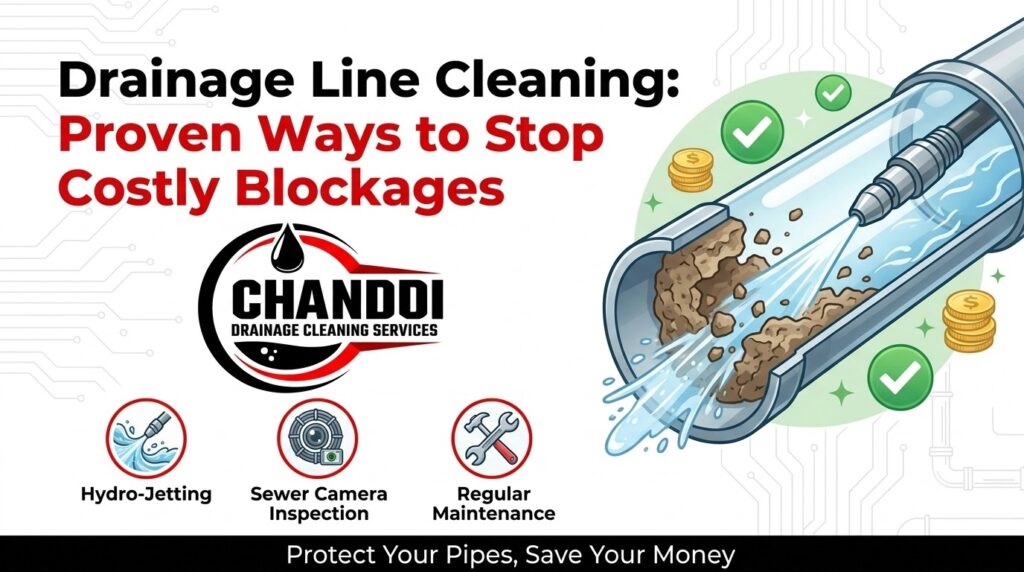
A drainage problem rarely starts with a completely blocked pipe. You may first notice slow water flow, an unpleasant smell, gurgling sounds, or wastewater collecting around a chamber. These signs can indicate that debris, grease, silt, or other materials are restricting the flow inside the drainage system.
Understanding the cause early can help you choose the right solution instead of repeatedly treating the same blockage. In many cases, drainage line cleaning can restore proper flow when the problem is caused by accumulated waste or debris. However, recurring blockages may point to a damaged or poorly functioning pipe that needs further inspection.
What Is Drainage Line Cleaning?
Drainage line cleaning involves removing accumulated waste, sludge, grease, sediment, and other obstructions from a drainage pipeline so wastewater can flow normally.
Unlike cleaning a visible floor or sink drain, line cleaning deals with pipes that may extend beneath a building, yard, parking area, road, or other external space. The blockage may therefore be located far from the point where you first notice the problem.
Professional cleaning methods depend on the pipe size, blockage type, accessibility, and severity of the obstruction. The technician may inspect the affected section before selecting an appropriate cleaning method.
This makes the process different from simply using a household drain cleaner or pouring chemicals into a blocked drain.
What Causes A Drainage Line To Block?
A drainage system carries different types of wastewater and waste materials. Over time, these materials can accumulate inside the pipe and reduce its effective diameter.
Common causes include:
- Grease and oil deposits
- Food particles entering drainage lines
- Mud and silt accumulation
- Hair and organic waste
- Foreign objects
- Excessive solid waste
- Tree roots entering damaged pipes
- Broken or displaced pipe sections
- Poor drainage gradients
- Long periods without professional cleaning
A drain pipe blockage can therefore have more than one cause. Removing the visible obstruction may provide temporary relief if the underlying problem remains inside the line.
For example, a pipe that repeatedly collects grease may become restricted again after a short period unless the accumulated deposits are thoroughly removed.
For persistent grease buildup, silt accumulation, or severe blockages, consider professional drainage cleaning services in Bangalore to restore proper wastewater flow.
How Can You Tell If The Main Drain Is Blocked?
A local drain problem usually affects one fixture. A problem in a larger drainage line can affect several outlets at the same time.
Look for these warning signs:
Slow Drainage In Multiple Areas
If wastewater is draining slowly from several bathrooms, utility areas, or other outlets, the restriction may be farther down the system.
Water Backflow
Wastewater coming back through a floor drain or another outlet can indicate a significant obstruction.
Unpleasant Drain Odour
Persistent foul smells may occur when wastewater and organic material remain trapped inside a partially blocked line.
Gurgling Sounds
Bubbling or gurgling from drains can occur when water and air struggle to move through a restricted pipeline.
Overflowing Drainage Chambers
An overflowing chamber should not be ignored. It may indicate that wastewater is unable to move through the connected drainage line.
Recurring Blockages
If the same drainage problem returns soon after basic cleaning, the issue may be deeper than a simple surface obstruction.
These signs can help you distinguish between an isolated drain problem and a wider drain line blockage.
When Does A Blockage Need Professional Cleaning?
Not every slow drain requires professional intervention. A small obstruction in an accessible household drain may sometimes be resolved with basic maintenance.
Professional assistance becomes more important when:
- Multiple drains are affected
- Wastewater is backing up
- A drainage chamber is overflowing
- The blockage keeps returning
- The affected pipe is underground
- The drainage system serves a commercial property
- There is a strong sewage smell
- Previous DIY attempts have not solved the problem
If the affected section is difficult to access, attempting to force the blockage through the pipe can sometimes make the situation worse.
Blocked sewer lines and overflowing manholes can require prompt attention. For more information, see this Indian government service resource on sewerage blockages.
A professional assessment can help determine whether cleaning is appropriate or whether the pipe requires repair.
If multiple drains are affected or the blockage keeps returning, explore our professional drainage cleaning services to identify and address the problem effectively.
How Is Drainage Line Cleaning Usually Done?
The exact process depends on the drainage system and the obstruction.
First, the affected area is assessed to understand where the blockage may be located. The technician may examine nearby chambers, outlets, and accessible sections of the pipeline.
Next, the appropriate equipment and cleaning method are selected. Professional drainage pipe cleaning may involve equipment designed to break down or remove accumulated material from inside the pipe.
After the obstruction is cleared, the wastewater flow can be checked to determine whether the line is functioning properly.
For severe blockages, the process may require additional inspection. If the pipe itself is damaged, cleaning alone will not permanently solve the problem.
Can Cleaning Solve Every Drainage Problem?
No. Cleaning is effective when accumulated material is restricting the flow, but some drainage problems have a structural cause.
For example, tree roots can enter cracked pipes. A damaged pipe may collapse internally. Poor pipe alignment or an incorrect gradient can also contribute to recurring drainage problems.
If the same section becomes blocked repeatedly despite proper cleaning, the property owner should investigate the underlying cause.
This is particularly important for commercial properties where repeated wastewater problems can interrupt operations.
In some situations, sewer line cleaning may be appropriate for larger wastewater lines, while other situations may require pipe repair or replacement.
What Should You Do If The Blockage Keeps Returning?
Repeated blockages are a signal to investigate rather than simply clear the same obstruction again.
Start by identifying whether the problem affects one outlet or several connected drainage points. Note how frequently the blockage returns and whether wastewater backs up through a chamber or another drain.
You should also consider whether grease, silt, foreign objects, or structural pipe problems could be contributing to the issue.
If repeated cleaning only provides temporary results, ask a professional to inspect the affected section. Identifying the actual cause can prevent unnecessary repeat visits and help you choose a longer-term solution.
How Can You Reduce Future Drainage Problems?
Regular maintenance can reduce the amount of waste entering your drainage system.
You can take several practical steps:
- Do not pour cooking oil or grease into drains.
- Keep solid waste out of wastewater outlets.
- Use suitable drain covers where appropriate.
- Remove visible debris around drainage chambers.
- Address slow drainage before it becomes a major blockage.
- Arrange professional maintenance for heavily used systems.
- Investigate recurring blockages instead of repeatedly treating the symptoms.
For commercial buildings, kitchens, apartments, and other properties with heavy wastewater usage, maintenance requirements may be greater than those of a typical residential drain.
When Should You Consider Drainage Line Cleaning?
There is no single schedule that works for every property. Cleaning requirements depend on pipe size, wastewater volume, property usage, previous blockage history, and the materials entering the drainage system.
A property with frequent grease, sludge, or solid-waste accumulation may require more regular attention than a lightly used residential system.
Instead of waiting for wastewater to overflow, watch for early warning signs such as slow flow, odours, gurgling sounds, and repeated blockages.
Timely drainage line cleaning can be useful when accumulated material is restricting normal wastewater flow and can help prevent a minor restriction from developing into a more disruptive blockage.
What If Cleaning Does Not Fix The Problem?
If wastewater continues to drain slowly after professional cleaning, the problem may not simply be accumulated debris.
Possible causes include:
- Cracked drainage pipes
- Collapsed pipe sections
- Root intrusion
- Incorrect pipe slope
- Displaced joints
- Severe structural deterioration
In these situations, another round of cleaning may only provide temporary improvement.
A professional assessment can determine whether the property needs cleaning, drain pipe blockage removal, pipe repair, or replacement.
This distinction is important because treating a structural problem as a routine blockage can lead to repeated costs and recurring drainage issues.
For reliable drainage line cleaning, drain blockage removal, and professional drainage solutions, visit Chandu Drainage Cleaning in Bangalore to learn more about the services offered.
FAQ About Drainage Line Problems
How Do I Know If A Drainage Line Is Blocked?
Multiple slow drains, wastewater backflow, foul odours, gurgling sounds, and overflowing chambers can indicate a blockage in a larger drainage line.
Is A Drain Pipe Blockage Different From A Main Drain Blockage?
Yes. A local blockage may affect one drain, while a main drain blockage can affect several connected outlets because the obstruction is farther along the drainage system.
Can I Use Chemical Drain Cleaners For A Blocked Line?
Chemical products may not be suitable for every drainage system and may not remove severe or deep obstructions. For recurring or major blockages, professional assessment is safer and more effective.
How Often Should Drainage Pipes Be Cleaned?
There is no universal interval. Cleaning frequency depends on the property’s usage, pipe condition, wastewater volume, and history of blockages. Properties with heavy usage may need more frequent maintenance.
Does Drainage Cleaning Fix Damaged Pipes?
No. Cleaning can remove accumulated material, but it cannot repair a cracked, collapsed, displaced, or severely damaged pipe. Structural problems may require repair or replacement.
What Should I Do If My Drainage Problem Keeps Returning?
Do not keep treating the same blockage without investigating its cause. A recurring problem may indicate grease buildup, root intrusion, pipe damage, poor drainage design, or another underlying issue.
Can Professional Drainage Cleaning Help Prevent Blockages?
Regular maintenance can reduce accumulated waste inside drainage pipes and may help prevent severe restrictions. However, maintenance cannot prevent every blockage, particularly when structural pipe problems are involved.
Need Professional Drainage Line Cleaning?
If you are experiencing recurring blockages, slow drainage, or overflowing chambers, contact Chandu Drainage Cleaning for professional drainage line cleaning services in Bangalore.