
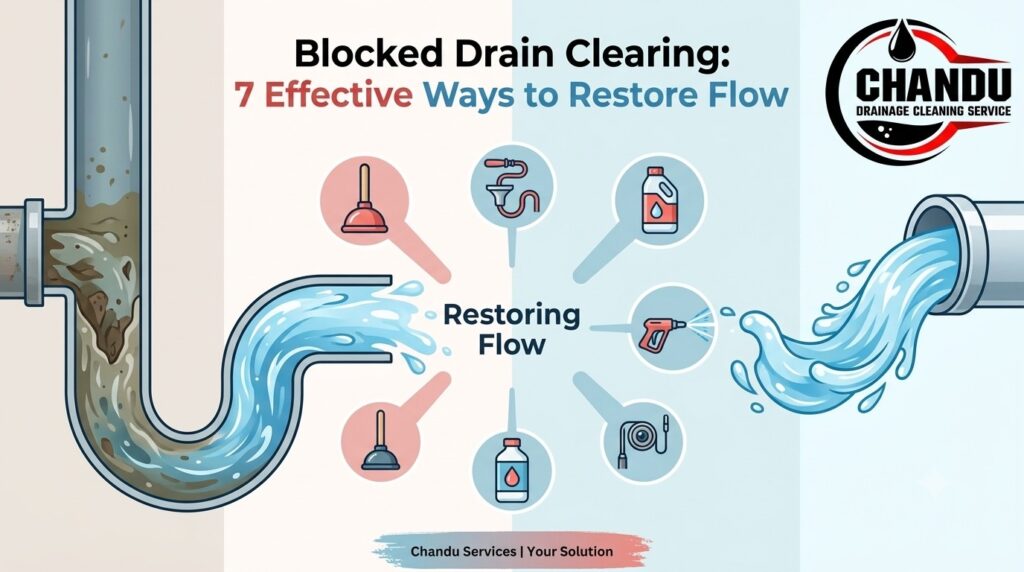
Blocked Drain Clearing: 7 Effective Ways to Restore Flow
A blocked drain can disrupt your daily routine, create unpleasant odours, and cause wastewater to collect around your property. The right solution depends on where the blockage occurs, what causes it, and how severely it restricts water flow.
Blocked drain clearing involves removing accumulated waste, grease, sediment, or other obstructions that prevent water from flowing through a drainage system. While minor obstructions may respond to simple cleaning methods, underground blockages, recurring backups, and overflowing drainage chambers often require professional attention.
If you are dealing with a stubborn blockage, understanding the available Blocked Drain Clearing methods can help you choose the right next step and avoid making the problem worse.
What Are the Common Signs of a Blocked Drain?
Recognising the warning signs early can help you address a drainage problem before it becomes more disruptive.
Watch for these symptoms:
- Slow water drainage: Water takes longer than usual to disappear from a floor drain, sink, or bathroom outlet.
- Wastewater backing up: Water returns through a drain instead of flowing away.
- Unpleasant odours: Persistent smells may indicate trapped organic waste or stagnant wastewater.
- Gurgling sounds: Bubbling noises can occur when air and water move through a restricted pipe.
- Overflowing chambers: Wastewater collecting around a drainage chamber may indicate an obstruction farther along the line.
- Multiple affected outlets: Several drains becoming slow simultaneously may suggest a blockage in a shared drainage line.
If wastewater is backing up or a chamber is overflowing, avoid using connected fixtures until the cause has been assessed. Keep children and pets away from contaminated water.
What Causes Drain Blockages?
Understanding the cause helps you select an appropriate clearing method instead of repeatedly treating the symptoms.
Grease and oil buildup: Cooking fats can stick to pipe walls and collect other waste, gradually restricting the opening.
Food particles and solid waste: Materials that should not enter the drainage system can accumulate and obstruct the flow.
Hair and organic debris: Hair, soap residue, and other materials can form compact obstructions in bathroom drains.
Mud and sediment: Soil, silt, and debris may enter external drainage systems and settle inside pipes or chambers.
Foreign objects: Items accidentally entering an outlet can become lodged in narrow sections of pipe.
Pipe damage or misalignment: Cracks, displaced joints, root intrusion, or an unsuitable pipe gradient can contribute to repeated blockages.
A blockage caused by accumulated waste may respond to cleaning. A damaged pipe, however, may require inspection and repair rather than repeated clearing.
What Are Seven Effective Ways to Clear a Blocked Drain?
The most suitable method depends on the type of drain, the location of the obstruction, and the condition of the pipe.
1. Remove Accessible Debris
For Blocked Drain Clearing, switch off the water flow and remove accessible debris near a removable drain cover using suitable tools and protective gloves. Professional Drain Line Cleaning or Drain Blockage Removal may be necessary if the obstruction is deep inside the pipe.
Never reach blindly into a drain or attempt to retrieve an inaccessible object. Stop if you encounter contaminated water or sharp materials.
2. Use a Suitable Plunger
Blocked Drain Clearing may be possible for a minor household obstruction using a suitable plunger that creates pressure to move the blockage. For persistent problems, professional Drain Line Cleaning or Drain Blockage Removal may be necessary.
Choose a plunger designed for the fixture and follow its instructions. Avoid plunging if the drain contains chemical cleaners, the wastewater is contaminated, or you suspect a larger underground blockage.
3. Clean the Drain Cover and Accessible Trap
Hair, soap residue, and debris can collect around drain covers and accessible traps. Removing this buildup may restore flow when the obstruction is close to the outlet.
Only dismantle components you can safely access and reassemble. If the blockage lies beyond the accessible section, further inspection may be necessary.
4. Avoid Unnecessary Chemical Treatments
Chemical drain cleaners do not suit every pipe or blockage. Some products can damage certain materials, create hazardous splashes, or leave dangerous chemicals in standing water.
Never mix drain-cleaning chemicals or combine them with other household cleaning products. If you have already used a chemical cleaner, inform the technician before requesting assistance.
5. Inspect the Drainage Chamber
A drainage chamber can sometimes reveal whether wastewater is flowing normally through the connected system. If you notice an overflow, avoid opening or entering the chamber yourself.
Sewage chambers can contain contaminated water, harmful gases, and other serious hazards. A qualified professional should inspect the affected system and determine the appropriate clearing method.
6. Arrange Professional Drain Line Cleaning
When the obstruction is deep inside a pipe or affects several connected outlets, professional drain line cleaning may be the appropriate option.
A technician can assess the affected area, identify likely causes, and select suitable equipment for removing accumulated waste. Depending on the system, professional methods may include mechanical clearing or specialised water-jetting equipment.
After clearing the obstruction, the technician should check whether water is flowing properly. If the blockage returns, further inspection may be needed to identify an underlying pipe problem.
7. Investigate Recurring Blockages
If the same drain becomes blocked repeatedly, clearing it again may provide only temporary relief.
Recurring problems can indicate persistent grease buildup, accumulated sediment, tree-root intrusion, damaged pipes, or an unsuitable drainage gradient.
A professional assessment can help determine whether the property needs additional cleaning, a closer pipe inspection, or repair work. Identifying the cause can reduce unnecessary repeat treatments.
When Should You Choose Professional Drain Blockage Removal?
Simple obstructions near an accessible household outlet may sometimes be resolved with basic cleaning. However, more complicated problems may require professional Blocked Drain Clearing to restore normal drainage safely.
Consider professional drain blockage removal when:
Several drains become blocked at the same time.
Wastewater backs up through floor drains or other outlets.
A drainage chamber overflows.
The blockage occurs in an underground pipeline.
Basic cleaning does not restore normal flow.
The same problem returns frequently.
A commercial property experiences significant drainage disruption.
Professional assistance is particularly useful when the location of the obstruction is unclear. A technician can assess whether professional Blocked Drain Clearing or targeted Drain Line Cleaning is needed because the problem lies in a shared or main drainage line, rather than repeatedly treating one outlet.
Do not enter a manhole, open an overflowing sewage chamber without appropriate precautions, or attempt to clear an underground obstruction using improvised equipment.
If wastewater buildup or sewage-related blockages are affecting your property, our sewage cleaning service can help you address the problem safely and efficiently.
How Does Professional Drain Line Cleaning Work?
The process depends on the drainage layout and the nature of the obstruction.
Step 1: Initial assessment
The technician reviews the symptoms, identifies the affected outlets, and checks accessible sections of the drainage system.
Step 2: Identifying the likely obstruction
The inspection helps determine whether accumulated waste, grease, sediment, foreign objects, or possible pipe damage is causing the problem.
Step 3: Selecting the appropriate method
The technician chooses a suitable clearing method based on the pipe condition, obstruction type, and accessibility.
Step 4: Clearing the blockage
Appropriate equipment is used to remove or dislodge the obstruction without applying unsuitable methods to the drainage system.
Step 5: Checking water flow
After clearing, the technician checks whether the drainage system is functioning properly. Persistent symptoms may require additional inspection or repairs.
This process helps distinguish a straightforward blockage from a more serious drainage issue.
How Can You Prevent Future Drain Blockages?
Although no maintenance routine can prevent every blockage, a few practical habits can reduce the risk.
- Avoid pouring cooking oil, grease, and fats into drains.
- Keep food scraps and solid waste out of wastewater outlets.
- Use suitable drain covers to catch hair and larger debris.
- Remove accessible debris before it accumulates.
- Address slow drainage before wastewater begins backing up.
- Arrange appropriate maintenance for heavily used commercial drainage systems.
- Investigate recurring problems rather than relying on repeated temporary fixes.
For apartments, restaurants, and commercial properties, maintenance requirements depend on wastewater volume, pipe condition, and the materials entering the drainage system.
Adopting appropriate wastewater management practices can help reduce drainage problems and support better sanitation in residential and commercial properties.
Why Choose Chandu Drainage Service in Bangalore?
When a blockage affects your home, apartment, or commercial property, the right solution starts with understanding the problem and choosing effective Blocked Drain Clearing methods.
Chandu Drainage Service provides drainage cleaning services in Bangalore for customers who need help addressing blocked drains and wastewater flow problems. The appropriate service depends on the location and severity of the blockage, whether it requires Drain Line Cleaning or professional Drain Blockage Removal.
If you are experiencing recurring drainage issues, slow water flow, or wastewater backups, contact the team to discuss the problem and determine the next step.
Visit the drainage cleaning service page to learn more about the available services, or use the website’s contact section to request assistance.
For reliable solutions to persistent blockages and wastewater flow problems, explore our drainage cleaning service in Bangalore to find the right assistance for your property.
Frequently Asked Questions
What Is Blocked Drain Clearing?
Blocked drain clearing is the process of removing obstructions that prevent water or wastewater from flowing through a drainage system. The method depends on the obstruction, pipe condition, and location.
What Is the Difference Between Drain Clearing and Drain Cleaning?
Drain clearing focuses on removing an obstruction that restricts flow. Drain cleaning can also involve removing accumulated grease, sludge, sediment, and other deposits from inside the pipe.
When Is Drain Line Cleaning Necessary?
Drain line cleaning may be necessary when wastewater flows slowly through a pipeline, several outlets are affected, or accumulated waste restricts the drainage system. A professional assessment helps determine the appropriate method.
Can I Clear a Blocked Drain Myself?
You may be able to remove accessible debris or clear a minor household obstruction using a suitable plunger. Avoid hazardous chemicals, inaccessible pipes, and sewage chambers. Seek professional help for persistent or severe blockages.
Why Does My Drain Keep Getting Blocked?
Repeated blockages may result from grease buildup, accumulated debris, tree roots, damaged pipes, or poor drainage gradients. Identifying the underlying cause is important when the problem keeps returning.
How Much Does Drain Blockage Removal Cost in Bangalore?
The cost depends on the blockage location, severity, pipe accessibility, equipment required, and whether repairs are necessary. Contact a service provider for an assessment and quotation.
Does Professional Drain Cleaning Fix Damaged Pipes?
No. Cleaning can remove accumulated waste, but it cannot repair cracked, collapsed, or displaced pipes. Structural damage may require separate repair or replacement work.
Contact Chandu Drainage Service for Professional Drainage Solutions
Are you experiencing blocked drains, recurring drainage problems, or wastewater backups in Bangalore? Contact Chandu Drainage Service to discuss your requirements and find a suitable solution for your property.
Whether you need drainage cleaning, drain blockage removal, or assistance with persistent drainage issues, our team can help you understand the available service options.