
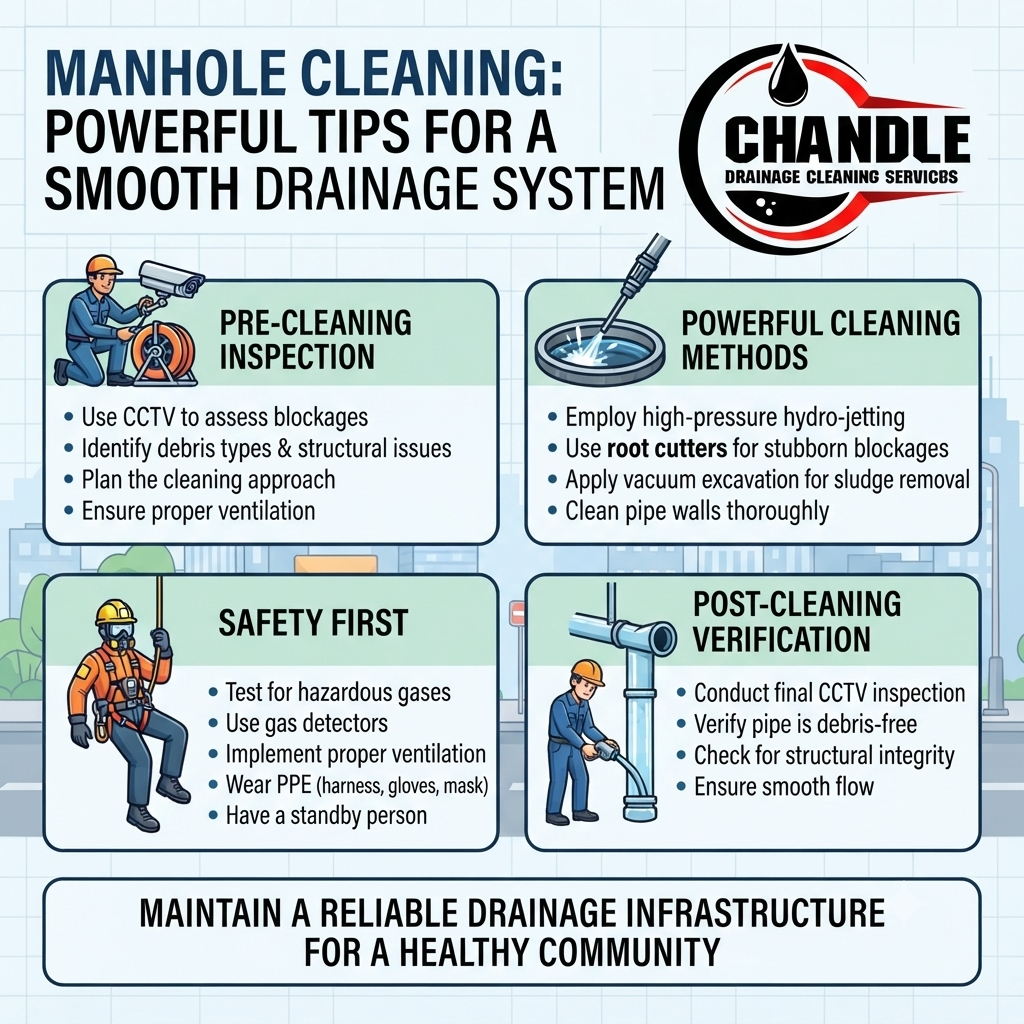
A properly operating drainage system includes more than just underground pipes. Manholes give access to drainage and sewer lines, enabling them to be inspected, cleaned, and maintained. Obstructions such as silt, sludge, waste, or other materials in these access points can restrict flow in these crucial lines.
Manhole Cleaning removes unwanted materials from the chamber to ensure free-flowing drainage in the connected pipes. Learning about the use, blockage causes, signs, and cleaning methods can help property owners deal with the issue without unnecessary delays.
What Is A Manhole And Why Is It Important?
A manhole is an access point built above underground drainage or sewer lines. These structures are used to inspect the pipes and perform cleaning and maintenance tasks.
Drainage manholes can occasionally accumulate waste or sediment from the connected lines. This buildup restricts the flow capacity, and causes blockages.
These structures are commonly located near residential houses, commercial buildings, apartment complexes, roads, and other developed areas. Consequently, manholes can affect the drainage of the surrounding structures.
A manhole is an access point built above underground drainage or sewer lines. These structures are used to inspect the pipes and perform cleaning and maintenance tasks. For additional information on manhole requirements, refer to the BIS Code of Practice for Manholes.
What Is A Manhole Chamber Used For?
A manhole chamber is used to give access to underground drainage connections. It can hold onto silt, wastewater, solid waste, or other materials that have entered the drainage system. The inspection chamber also serves as an inspection point for professionals. They can ascertain the condition of the chamber and the connected drainage pipes to determine the most appropriate cleaning method.
Having a free-flowing chamber is useful in facilitating easy inspection and maintenance. It also helps in identifying potential blockage points in the connected drainage lines.
What Is A Drainage Manhole?
A drainage manhole is an access point provided on a drainage network. The structure enables professionals to gain access to the underground drainage lines to perform inspection, cleaning, and maintenance tasks.
The location and configuration of these access points depend on the configuration of the drainage network. Some properties have multiple access points connected to different sections of the drainage system.
Consequently, blockage in one access chamber can result in slow wastewater drainage from other chambers. For this reason, inspecting the access point connected to the affected drainage line is necessary.
What Causes Manholes To Become Blocked?
There are different materials that can accumulate in an access chamber. The causes of blockage depend on the condition of the property, drainage network, and connected pipes.
Among the common materials that can restrict free-flowing drainage include:
- Silt and soil
- Solid waste materials
- Grease
- Leaves and other outdoor materials
- Construction waste
- Wastewater materials
- Damaged pipes
- Heavy deposits of sludge
Inappropriate disposal of solid waste materials in the drainage system can also contribute to blockage. Waste materials that do not easily dissolve should be disposed of in designated bins to prevent clogging of the drainage lines.
What Are The Signs That A Manhole Needs Cleaning?
A blocked chamber may require Manhole Cleaning when you notice foul smells, slow drainage, wastewater backflow, visible sludge, recurring blockages, or unusual gurgling sounds. These signs can indicate waste accumulation in the manhole chamber or connected drainage manhole lines. Professional inspection can identify the source and determine the appropriate cleaning method.
How Is Manhole Cleaning Performed?
The method used for manhole cleaning depends on the severity of the blockage and its impact on the connected drainage pipes. Generally, the process can be performed by following these steps:
- Inspection of the affected area and the access chamber.
- Removal of the cover using appropriate tools.
- Eliminate unwanted wastes, materials, and debris that have accumulated in the chamber.
- Clean the affected drainage lines if the blockage extends to the connected pipes.
- Confirm the free-flowing of wastewater through the chamber.
- Final inspection of the chamber and the affected area.
The procedure for manhole cleaning can differ depending on the severity of the blockage and the type of materials that have accumulated. Professional cleaners can identify the most appropriate cleaning method after inspecting the chamber.
If the blockage extends into the connected pipes, professional drainage cleaning services can help clear the affected lines.
When Should You Hire Professional Cleaning Services?
Minor blockages can temporarily slow wastewater drainage, but recurring blockages should not be ignored. Frequent foul smells or slow drainage may indicate sludge buildup in the Manhole Chamber or underground Drainage Manhole lines, requiring professional Manhole Cleaning.
Commercial buildings, apartments, institutions, and large residential properties handle high wastewater volumes and may need regular inspection and Manhole Cleaning to prevent blockage buildup and maintain proper flow.
Professional cleaning may also be required when the blockage in a Manhole Chamber is difficult to locate or ordinary drain-unclogging methods do not resolve the problem.
Properties with septic systems may also require septic tank cleaning when wastewater drainage problems are associated with the tank.
How Does Manhole Cleaning Differ From Regular Drain Cleaning?
Drain cleaning is normally performed on individual drains and sewer lines. Manhole Cleaning procedure, on the other hand, is performed on an access chamber to remove excess sludge, sediment, waste, and other foreign materials.
Consequently, Manhole Cleaning and regular drain cleaning procedures are different. A property owner should consider both processes if there are recurrent drainage problems in an individual drain or bathtub.
Blockage in a drain or bathtub can be brought about by waste material accumulation in the chamber. The material accumulation can be identified during inspection. Therefore, it is not sufficient to clear an individual drain if the blockage is not cleared in the chamber. The blockage can be a combination of drain or bathtub obstruction and material accumulation in the underground drainage lines.
When the blockage extends into underground sewer lines, sewer cleaning services may also be required.
How Can A Drainage Manhole Be Maintained?
Proper maintenance can help in avoiding excessive waste accumulation in an access chamber. There is no specific timeframe for manhole maintenance since it depends on the rate of waste accumulation. It is useful to maintain free-flowing drainage in the connected pipes by avoiding disposal of solid waste materials in the drain.
Construction waste materials should also be disposed of in appropriate sites to avoid blockage. Eliminating the accumulation of leaves and soil around the chamber is also important.
Routine inspection can be useful in cases of recurrent blockage. Inspection can also be necessary if there is wastewater backflow to identify the primary cause of the problem.
It is also useful to clear any drain blockage that may hinder the free-flow of wastewater. In addition, professional inspection can be sought if there is a persistent decrease in the rate of wastewater drainage.
Can Regular Cleaning Prevent Drainage Problems?
Routine cleaning procedures are useful in minimizing the chances of waste accumulation and blockage formation. However, it is not always possible to prevent all drainage problems. Other factors such as pipe damage, tree root intrusion, faulty installation, and increased wastewater flow can affect the free-flow of wastewater in the pipes.
As a result, recurring blockage indicates a problem that requires professional intervention. Persistent obstruction may be an indicator of pipe damage or wastewater blockage in the underground drainage system. Therefore, regular cleaning of an access chamber does not prevent all drainage problems.
What Should You Check Before Hiring A Cleaning Service?
Before hiring a cleaning service for manhole unblocking, it is useful to describe the problem affecting the chamber. It is also important to state the effects of the problem, such as slow drainage, foul smell, or wastewater backflow. It will be necessary to identify if the issue affects household drainage lines or commercial drainage networks.
In addition, it is important to ask if the inspection is included in the cleaning procedure. The following questions can be asked:
- What method will be used for cleaning?
- Will the excess waste materials be cleared?
- Will the connected underground drainage lines be inspected?
- What equipment will be used for the procedure?
- Are there any additional costs?
- What will be the fate of cleared materials from the chamber?
It is possible to avoid misunderstandings regarding the cleaning procedure by discussing these issues with the service provider.
Why Is Professional Cleaning Important For Commercial Properties?
Commercial buildings, restaurants, offices, and apartments handle large wastewater volumes, making drainage blockages disruptive. Professional Manhole Cleaning can remove waste from the manhole chamber and help identify blockages in connected drainage manhole systems, making it useful for large residential and commercial properties.
How Can You Reduce The Risk Of Manhole Blockages?
Proper drainage practices can reduce waste accumulation. Avoid disposing of solid waste, foreign objects, and construction materials through drains, and keep leaves and soil away from the chamber. If a drainage manhole develops foul odours, wastewater overflow, or slow drainage, professional Manhole Cleaning and inspection can help identify blockages.
Frequently Asked Questions
What Is Manhole Cleaning?
The procedure involves removing excess sludge, sediment, waste, and other foreign materials from an access chamber that leads to underground drainage or sewer lines.
How Often Should A Manhole Be Cleaned?
There is no specific time interval for manhole cleaning. The procedure should be performed based on the volume of waste materials and the size of the property served by the chamber.
What Causes A Manhole To Overflow?
Waste accumulation and blockage in the pipelines connected to the chamber causes overflow. In addition, excessive wastewater flow can cause overflow if the chamber and connected pipes do not have sufficient capacity.
Can A Blocked Manhole Affect Household Drains?
A blockage in an underground drainage line connected to a household chamber can cause slow drainage in the household sink and bathtub. In severe cases, the blockage can cause wastewater backflow from the chamber.
Is Manhole Cleaning The Same As Drain Cleaning?
Manhole Cleaning is different from drain cleaning. While drain cleaning clears an individual bathtub or sink drain, Manhole Cleaning clears an access chamber to facilitate free-flowing wastewater in the underground drainage system.
When Should Professional Help Be Considered?
Professional help should be sought when there are recurring blockage problems. It is also necessary to seek professional assistance if there is foul smell coming from an access chamber, or persistent wastewater backflow or slow drainage.
Need Professional Drainage Assistance?
For reliable drainage cleaning and blockage solutions, contact Chandu Drainage Service to discuss your requirements and get professional assistance.