
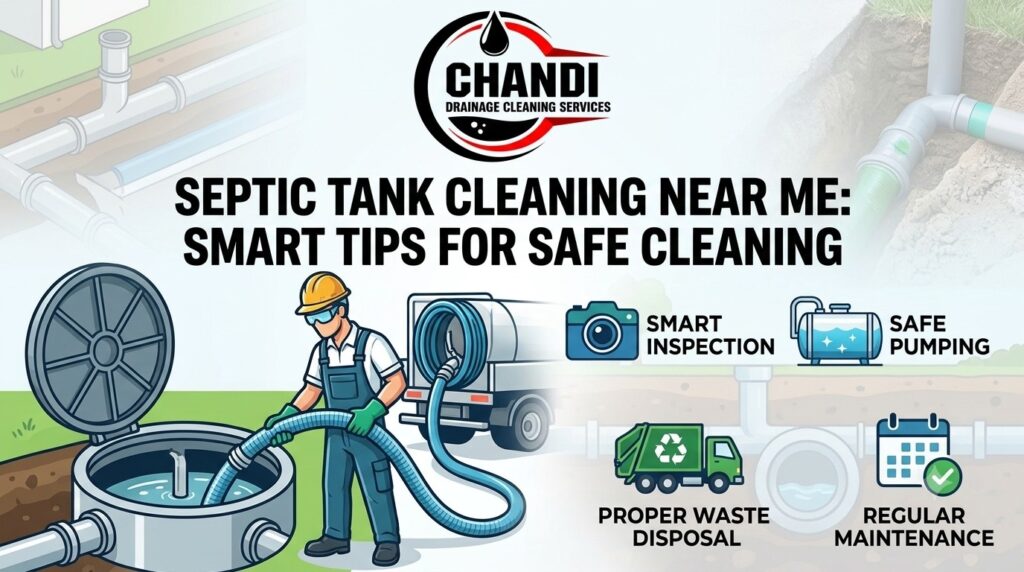
Searching for a septic tank cleaning service becomes urgent when wastewater backs up, sewage smells develop, or drainage slows across your property. Knowing what causes these problems and which service you need can help you avoid unnecessary expenses and unsafe cleaning attempts.
This guide explains how septic tank cleaning works, the warning signs to watch for, the difference between tank and sewer cleaning, and the steps to arrange professional help.
The Short Version
- Septic tanks require periodic inspection and waste removal to maintain proper operation.
- Persistent sewage smells, slow drainage and wastewater backups can indicate a problem.
- Septic Tank Cleaning Near Me is a useful search when you need a local professional to assess your system.
- Tank cleaning and pipe cleaning address different problems, so identifying the cause matters.
- Never enter a septic tank or attempt to remove its contents manually because dangerous gases may be present.
- Ask about the service scope, waste disposal, estimated cost and additional charges before confirming a booking.
What Does Septic Tank Cleaning Involve?
Septic tank cleaning involves removing accumulated sludge, scum and other waste from a septic system when servicing is required. The tank receives wastewater from connected fixtures, allowing heavier solids to settle while lighter materials collect near the surface.
Over time, these materials accumulate and reduce the space available for wastewater treatment. The appropriate servicing interval depends on the tank capacity, wastewater volume, number of users and system condition.
Professional cleaning generally involves inspecting the site, preparing suitable equipment, removing accumulated waste and checking accessible components for visible problems.
When looking for Septic Tank Cleaning Near Me, explain whether you have noticed slow drainage, unpleasant smells, overflowing wastewater or another issue. These details help the service provider assess whether the tank needs cleaning or a different intervention.
Common reasons to arrange an inspection include:
- Wastewater backing up through toilets or floor drains
- Persistent sewage smells around the tank or drainage area
- Repeated drainage problems affecting multiple fixtures
- Unusually wet ground near the tank or associated drainage field
- Accumulated waste identified during a routine inspection
These symptoms do not always mean the tank requires cleaning. A blocked pipe, damaged tank, ventilation problem or other fault may produce similar signs.
How Is Septic Tank Cleaning Different From Septic Sewer Cleaning?
Septic tank cleaning focuses on removing accumulated waste from the tank. Sewer and drainage cleaning addresses problems within connected pipes, chambers and other drainage infrastructure.
Choosing the right service depends on where the problem originates.
| Problem | Possible cause | Appropriate next step |
| Multiple toilets drain slowly | Shared pipe blockage or septic system issue | Inspect the connected drainage system |
| Wastewater backs up repeatedly | Blockage, overloaded tank or system fault | Arrange a professional assessment |
| Sewage smells near the tank | Waste accumulation, damaged cover or ventilation issue | Inspect the tank and surrounding components |
| One sink drains slowly | Local blockage in the fixture or pipe | Check the affected drainage line |
| Wet ground near the tank | Possible leakage or drainage failure | Arrange an inspection for leaks or damage |
Septic Sewer Cleaning may be appropriate when the problem involves waste accumulation or blockages in connected drainage infrastructure. However, a tank that needs servicing may require a different procedure.
Cleaning the tank will not necessarily clear a blocked pipe. Similarly, clearing a pipe will not resolve a cracked tank or a system that requires waste removal.
Explain all the symptoms to the service provider before booking so the correct work can be identified.
What Are the Warning Signs of a Full or Blocked Septic System?
Recognising the warning signs early can help you arrange an inspection before a minor problem becomes a major disruption.
1. Slow Drainage Across Multiple Fixtures
If toilets, bathrooms and other connected outlets drain slowly at the same time, the problem may involve a shared drainage line or the septic system.
If only one sink or fixture is affected, the blockage may be localised. A professional assessment helps distinguish between these situations.
2. Persistent Sewage Odours
Unpleasant smells around the tank, inspection chamber or nearby drainage points can indicate waste accumulation, ventilation problems, damaged covers or leaks.
Do not open the tank to investigate the smell yourself. Septic systems can contain hazardous gases, even when no obvious problem is visible.
3. Wastewater Backups or Overflow
Wastewater returning through toilets or floor drains is a serious warning sign. Reduce water use in the affected system where possible and arrange professional assistance promptly.
Keep children and pets away from contaminated areas. Avoid touching sewage directly and follow appropriate cleaning and disinfection procedures if an area has been contaminated.
4. Unusually Wet Ground
Wet patches, persistent sewage smells or unusually green vegetation near the tank may indicate a leak or drainage failure. Rainfall and unrelated plumbing problems can also cause wet ground, so an inspection is needed to determine the cause.
Cleaning alone may not resolve the issue if the tank or connected pipes are damaged.
If several connected outlets are draining slowly, professional drainage cleaning services can help identify blockages in the connected drainage system.
How Does Professional Septic Tank Cleaning Work?
The process varies according to the tank design, accessibility, condition and amount of accumulated waste. A professional service generally follows these steps.
Step 1: Site inspection
The technician assesses the location, access arrangements, visible drainage problems and surrounding conditions. They may ask about previous servicing and any recurring symptoms.
Step 2: Equipment preparation
The appropriate equipment is selected for the site. Depending on the installation, this may include a vacuum tanker, suction equipment, hoses and protective equipment.
Step 3: Waste removal
Accumulated waste is removed using suitable equipment. The amount removed depends on the tank condition and the scope of the service.
Step 4: System assessment
Accessible components may be checked for visible damage, leaks or blockages. If a separate fault is identified, further inspection or repair work may be required.
Step 5: Responsible waste disposal
Collected waste must be transported and disposed of through appropriate authorised facilities and procedures. It should never be dumped into open drains, roads, vacant land or water bodies.
Before booking, ask whether the quotation includes waste removal, transportation and disposal.
For properties experiencing persistent sewage accumulation or wastewater problems, professional sewage cleaning services can help address the issue safely and appropriately.
Can You Clean Septic Tank Waste Yourself?
Handling routine maintenance around your property is useful, but opening or entering a septic tank is not a safe DIY task.
Septic tanks can contain hydrogen sulphide, methane and oxygen-deficient atmospheres. Exposure can cause serious injury or death. Some gases may be present even when the tank appears normal.
If you need to clean Septic Tank waste from an overloaded system, arrange professional assistance rather than attempting manual removal.
Follow these safety precautions:
- Never enter a septic tank, even if it appears empty.
- Never lean into an open tank to inspect its contents.
- Keep flames and smoking materials away from the tank.
- Do not attempt to remove waste using buckets or household equipment.
- Avoid pouring harsh chemicals into the system to dissolve accumulated sludge.
- Keep children and unauthorised people away from access openings.
- Ensure access covers remain secure when inspection work is complete.
Professional cleaning is particularly important when wastewater is overflowing, the tank is difficult to access or the system has not been serviced for a long time.
For further guidance on septic tank cleaning safety and precautions, refer to the official SOP for cleaning sewers and septic tanks
How Often Should a Septic Tank Be Cleaned?
There is no single cleaning schedule suitable for every property. The required interval
depends on several factors.
| Factor | Why it matters |
| Tank capacity | Smaller tanks may fill faster under similar usage conditions |
| Number of users | More people generally produce more wastewater |
| Water consumption | High wastewater volumes can place additional pressure on the system |
| Waste entering the tank | Non-degradable materials can contribute to blockages |
| Previous servicing | Inspection records help establish an appropriate maintenance schedule |
Arrange periodic inspections and follow the recommendations of a qualified service provider. Avoid waiting for an overflow before checking the system.
Keep records of previous servicing dates and any recurring problems. This information can help you plan maintenance and identify changes in system performance.
How Do You Choose the Right Septic Cleaning Service?
Choosing a suitable service provider involves more than comparing prices. You should understand what the service includes and whether the provider can address your specific problem.
Before confirming a booking, ask these questions:
- Does the service include waste removal and transportation?
- Is the quotation based on the tank size and the work required?
- Are additional charges applicable for difficult access or extra waste?
- Will the collected waste be disposed of responsibly?
- Can the provider inspect connected pipes if a blockage is suspected?
- Will you be informed if repairs are required beyond routine cleaning?
When searching for Septic Tank Cleaning Near Me, provide your location, property type and the symptoms you have noticed. Ask for an estimated cost and a clear explanation of the proposed work before authorising the service.
A provider who explains the process, safety precautions and charges clearly makes it easier to understand what you are paying for.
Frequently Asked Questions
1. What are the main signs that a septic tank needs attention?
Slow drainage across multiple fixtures, persistent sewage odours, wastewater backups and unusual wet ground can indicate a problem. These symptoms may also result from pipe blockages or leaks, so an inspection is important.
2. Does septic tank cleaning remove pipe blockages?
Not necessarily. Tank cleaning removes accumulated waste from the tank, while a blockage in a connected pipe may require separate drainage cleaning. The source of the problem should be identified before choosing a service.
3. Is it safe to open a septic tank at home?
Opening or entering a septic tank can expose you to toxic gases and oxygen-deficient conditions. Never enter the tank or attempt to inspect it by leaning into the opening. Leave the work to trained professionals.
4. How long does professional cleaning take?
The duration depends on tank capacity, accessibility, accumulated waste and system condition. Ask the service provider for an estimate after the site requirements have been assessed.
5. What information should I provide when booking a service?
Share your location, property type, visible symptoms and any available records of previous servicing. Mention whether wastewater is backing up, drainage is slow or sewage smells are present.
Need Reliable Septic Tank Cleaning? Contact Chandu Drainage Service
Regular inspection and appropriate waste removal help maintain a septic system and reduce the likelihood of unexpected drainage problems. Recognising warning signs, disposing of waste responsibly and arranging timely servicing can also help protect your property.
If you need Septic Tank Cleaning Near Me, contact Chandu Drainage Service to discuss your requirements and arrange an assessment. Explain the symptoms you have noticed so the appropriate service can be identified.
Contact Chandu Drainage Service today to discuss your septic and drainage cleaning requirements and request a service estimate.