
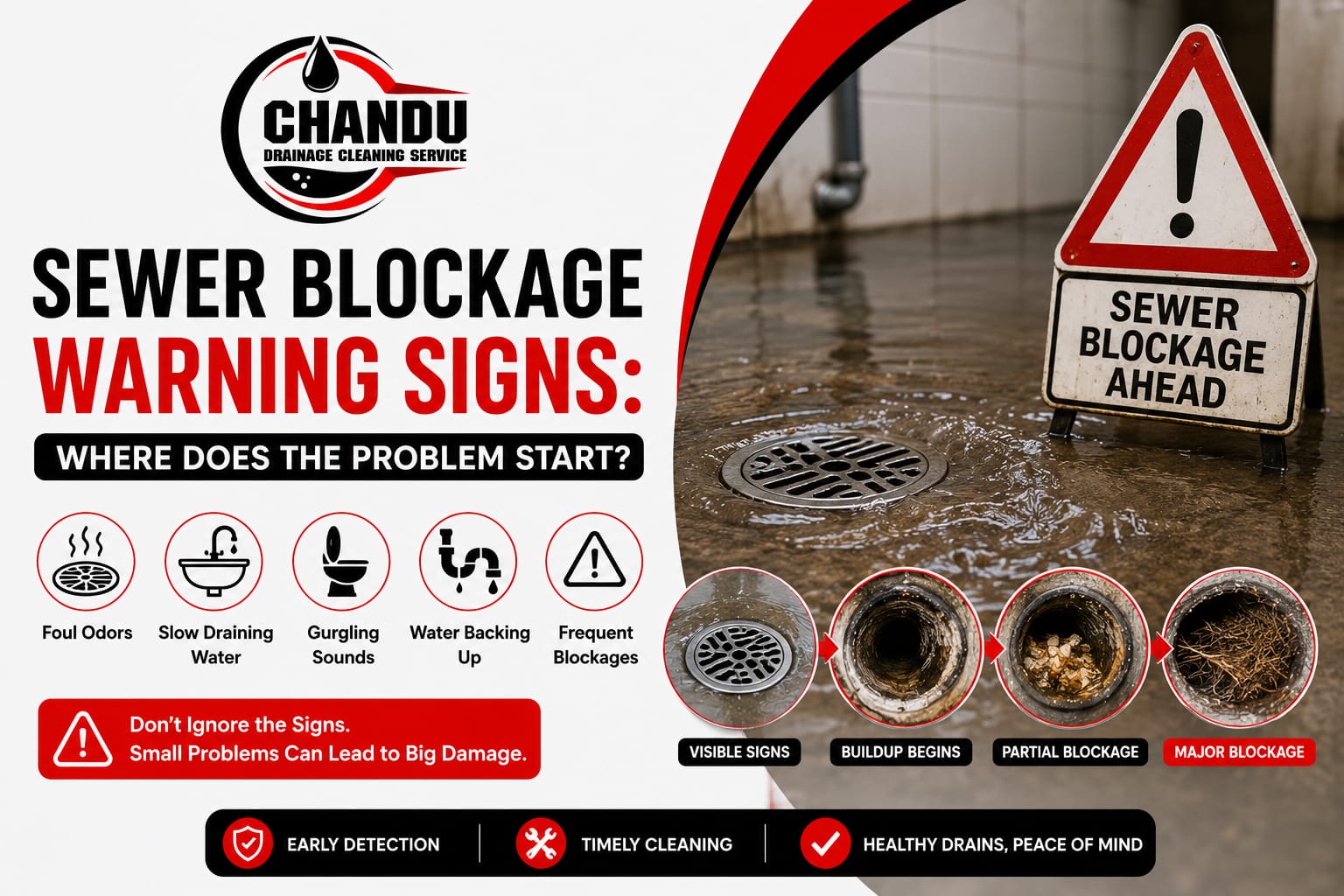
A sewer blockage rarely presents itself without warning. In many cases, your property will show several signs before a complete blockage or wastewater backup occurs. Slow drains, unusual sounds, unpleasant smells and recurring drainage problems can all indicate that something is restricting the sewer line.
Recognising these warning signs can help property owners arrange sewer cleaning before a minor obstruction develops into a major drainage emergency. Regular inspection and maintenance can also help identify problems such as accumulated debris, grease, sediment or root intrusion.
If you know what to look out for, you can identify a sewer blockage early and act before wastewater begins backing up into your home, business or surrounding property.
1. A Number of Drains Become Slow at the Same Time
One slow sink doesn’t necessarily mean that you have a sewer problem. It may just have a localised blockage.
However when a number of drains throughout a property start to drain slowly then it may be that the problem is further down the line. You may find that the kitchen sink, bathroom drain and toilet are all taking longer than usual to clear. This can indicate that wastewater is encountering resistance in a shared drainage or sewer line.
A recurring problem affecting a number of fixtures merits professional investigation rather than constant treatment of individual drains.
2. Water Starts Backing Up From Drains
Wastewater coming back through a drain is one of the more serious warning signs of a sewer blockage. When wastewater cannot move normally through a restricted pipe it may want to seek another route and return through a lower drain, resulting in dirty water appearing in bathrooms, floor drains or other low lying areas.
A backup should not be ignored contacting a professional early can help determine if the obstruction is limited to a drain or going deeper into the sewer system.
3. Toilets Gurgle or Behave Unusually
Unusual toilet behaviours can give you another indication of a sewer blockage. If a toilet gurgles when another fixture is being used, or if the water level changes unexpectedly, there may be restricted airflow or wastewater movement within the connected pipework. While occasional sounds may not be a problem, persistent gurgling combined with slow drainage or backups should be investigated.
A professional assessment can help determine if you need sewer pipe cleaning, sewer blockage removal, or another type of drainage solution.
4. Persistent Sewer Odours Appear
A strong sewage smell around drains, toilets, inspection chambers or outdoor drainage areas should not simply be treated as an unpleasant nuisance. Persistent odours can accompany drainage problems, stagnant wastewater or accumulated organic material. If cleaning a local drain does not clear the smell then the source should be investigated.
5. Blockages Keep Coming Back
A drain that becomes blocked repeatedly can indicate that the underlying problem has not been solved. For example, removing material near the opening can temporarily restore water flow while an obstruction remains farther inside the pipe. Grease, sediment, roots or other accumulated material can continue restricting the line.
Repeated blockages are therefore an important reason to consider professional sewer drain cleaning. The goal should be to determine why the blockage keeps returning and the most appropriate cleaning or repair method.
6. You Notice Wet or Unusual Areas Around The Property
Unexpected wet patches, standing wastewater or unusually damp areas near drainage lines can be indicative of a problem with underground wastewater infrastructure. This does not necessarily mean that the sewer line is blocked, as damaged pipes, leaks and other drainage issues can cause similar symptoms. For this reason property owners should not assume the cause based on what they can see as there may be more to it. Professional inspection can help establish if the problem is with blockage, leakage, pipe damage or something else.
7. A Sewer Problem Gets Worse After Heavy Use
Pay attention to when symptoms occur. If drains appear normal during light use, but become slow when several bathrooms, sinks or other fixtures are used then the drainage system may have a restricted flow capacity. This can be especially noticeable in larger homes, apartments, commercial properties and buildings with multiple connected fixtures.
Tracking when the problem occurs can provide a professional with a useful guide to assessing your sewer line.
Warning Signs At A Glance
| Warning Sign | What It May Indicate | Recommended Action |
| Several slow drains | Restriction in a shared line | Arrange professional inspection |
| Wastewater backup | Significant blockage or restricted flow | Seek prompt professional help |
| Gurgling toilet | Air or wastewater flow restriction | Monitor and arrange assessment if persistent |
| Persistent sewer odour | Stagnant wastewater or drainage issue | Identify and address the source |
| Repeated blockages | Unresolved obstruction | Consider professional sewer cleaning |
| Wet areas near drainage lines | Possible leak or underground problem | Arrange inspection |
| Problems during heavy use | Restricted drainage capacity | Have the system assessed |
What Causes Sewer Blockages?
Understanding possible causes can help you prevent recurring problems. Sewer lines can become restricted by grease, sludge, sediment, solid debris, roots and other materials. Older or damaged pipes can also contribute to recurring drainage problems. Tree roots are a particular concern as they can enter damaged or poorly sealed pipe joints and interfere with wastewater flow. Grease and other materials can also accumulate within pipes.
The exact cause cannot always be identified from the symptoms alone so professional inspection may be necessary before determining whether cleaning, repair or another solution is appropriate.
If you notice signs of a sewer blockage, contact Chandu Drainage Cleaning for reliable sewer cleaning and professional drainage solutions.
When is Sewer Cleaning Necessary?
Not every slow drain needs a complete sewer line cleaning. The appropriate solution depends on where the problem is and what is causing it. Sewer cleaning may be appropriate when:
- Multiple drains are affected
- Blockages repeatedly return
- Wastewater is backing up
- Sewer odours persist
- A deeper obstruction is suspected
- Drainage performance has progressively declined
Professional sewer cleaning services can assess the condition of the system and select an appropriate cleaning method. Existing Chandu services include techniques such as high pressure water jetting and CCTV inspection for drainage and sewage problems.
Why Early Action Matters
Waiting for a sewer line to completely block can turn a manageable maintenance issue into a disruptive emergency. A serious backup can spread contaminated wastewater into areas of a property, create unpleasant odours and potentially damage a property. Acting when the first warning signs appear lets a professional investigate the cause before the situation worsens.
Early intervention does not necessarily mean that you need frequent cleaning. It simply means responding appropriately when your drainage system shows signs that something is wrong.
Can You Prevent Sewer Blockages?
Good drainage habits can reduce the risk of blockages. Avoid putting grease, oils, wipes and unsuitable solid materials into drains. You should also pay attention to recurring slow drainage rather than repeatedly treating the symptom. If the same problem keeps returning, professional assessment is more useful than repeatedly treating the symptom. For properties with a history of drainage problems a maintenance plan may also help identify developing issues before they cause a major blockage.
Frequently Asked Questions
How do I know if I have a sewer blockage?
Multiple slow drains, wastewater backups, persistent odours, gurgling toilets and recurring blockages can indicate a sewer problem.
Can one blocked drain mean there is a sewer problem?
Not necessarily, as a single blocked fixture may have a localised obstruction. If several fixtures are affected simultaneously, however, then the problem may be further along the shared system.
Does sewer cleaning remove every type of blockage?
The appropriate cleaning method depends on the obstruction and pipe condition. Some blockages can be removed through mechanical or high pressure cleaning.
How can I prevent sewer blockage?
You can prevent sewer blockage by some methods. Avoid disposing of grease, oils, wipes and inappropriate solid materials through drains. Address recurring slow drainage and other warning signs promptly.
Should I wait until wastewater backs up before calling a professional?
No, as wastewater backup is a serious warning sign. It is better to investigate recurring slow drainage, unusual odours or repeated blockages before the problem develops into a major backup.
Conclusion
A sewer blockage will often give you several warning signs before it becomes a serious problem. Multiple slow drains, wastewater backups, gurgling toilets, persistent odours and recurring blockages should not be ignored.
Identifying these symptoms can help property owners determine when a professional sewer pipe cleaning or further inspection may be necessary. The right solution depends on the location and cause of the problem so repeated temporary fixes are not always enough.
If you are experiencing recurring blockages, slow drainage or wastewater backups then contact Chandu Drainage Cleaning for professional sewer cleaning services and reliable help with your drainage system.