
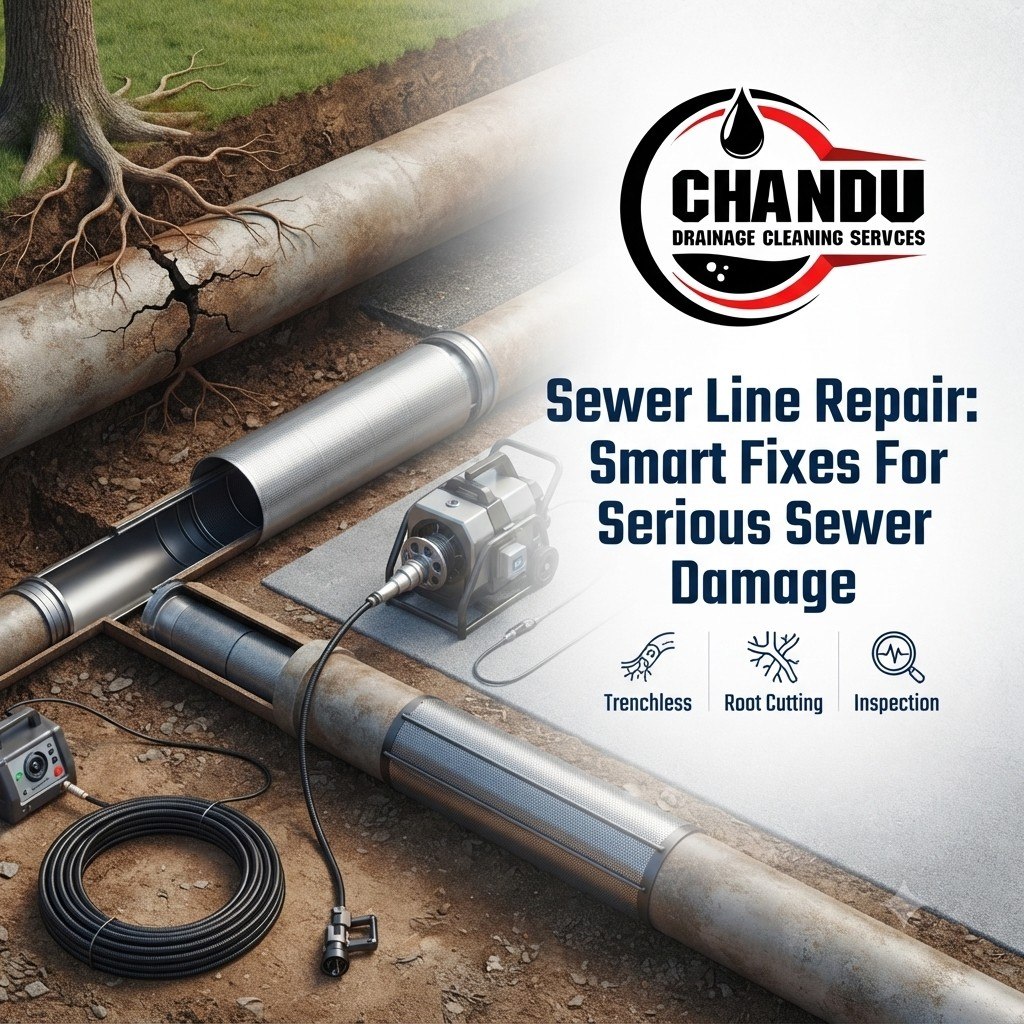
Sewer problems can quickly turn into serious drainage issues when damaged or broken underground pipes are ignored. Slow wastewater flow, sewage backups, foul smells, wet patches, and repeated blockages can indicate a problem with the sewer system. Early inspection can help you identify the cause and choose the right solution before the damage becomes more expensive.
Professional sewer line repair helps restore proper wastewater flow when pipes have cracks, leaks, joint damage, or partial blockages. Professional sewer line repair helps restore proper wastewater flow when pipes have cracks, leaks, joint damage, or partial blockages. Drainage cleaning services may also be required when blockages are contributing to wastewater problems. In some situations, repairing the affected section may be enough. When the pipeline is severely damaged or too old, replacement may provide a more reliable long-term solution.
What Is Sewer Line Repair?
Sewer Line Repair involves identifying and fixing damaged sections of a sewer pipeline that carry wastewater away from a property. The problem may occur because of cracks, broken joints, corrosion, tree root intrusion, ground movement, or ageing pipes.
The repair method depends on the location and severity of the damage. If the problem involves a damaged or deteriorated section of pipe, pipe replacement may be considered when repair is no longer reliable. A professional inspection can help determine whether the affected pipe can be repaired or needs replacement.
Ignoring a damaged sewer line can allow wastewater to leak into surrounding soil and create unpleasant odors, sanitation concerns, and additional drainage problems. Timely Sewer Line Repair can help prevent these issues from becoming more serious and costly.
What Are The Common Signs Of Sewer Line Damage?
Recognising early warning signs can help you arrange an inspection before a minor problem becomes a major one.
Slow Drainage
If several fixtures drain slowly at the same time, the issue may be deeper in the drainage system rather than limited to one sink or bathroom.
Repeated Sewer Blockages
Frequent blockages that return soon after cleaning may indicate a damaged, obstructed, or poorly functioning sewer pipeline.In some cases, chamber cleaning may be needed to remove accumulated waste and identify the source of the problem.
Unpleasant Sewer Smells
Persistent sewage odours around bathrooms, drains, outdoor areas, or inspection chambers can indicate leakage or another sewer system problem.
Sewage Backup
Wastewater backing up through floor drains, toilets, or other fixtures requires prompt attention. A backup can indicate a serious obstruction or damaged pipeline.
Wet Or Soggy Ground
Unexpectedly wet patches in a garden, driveway, or other area can sometimes occur when an underground sewer pipe is leaking.
Unusual Sounds From Drains
Gurgling sounds from toilets or drains may indicate restricted wastewater flow or an issue within the sewer system.
What Causes Sewer Pipe Damage?
Several factors can affect the condition of underground sewer pipes. Understanding these causes can help you identify problems earlier.
Ageing pipes: Older pipelines can weaken over time and become more vulnerable to cracks, leaks, and joint failure.
Tree roots: Roots can enter small cracks or joints while searching for water. As they grow, they can restrict the pipe and worsen existing damage.
Ground movement: Soil shifting or settlement can place pressure on underground pipelines and cause joints to move or pipes to crack.
Corrosion: Certain pipe materials can deteriorate gradually, reducing their strength and affecting wastewater flow.
Heavy external loads: Construction activity, vehicles, or other heavy loads above underground pipelines can contribute to structural damage.
Improper installation: Poor alignment, weak joints, or incorrect pipe gradients can create recurring drainage problems.
How Does Sewer Pipe Repair Work?
The repair process normally begins with identifying the source and location of the problem. A professional may inspect the drainage system and assess the affected section before deciding on the appropriate method.
Minor or localised damage may be addressed by repairing the affected section. If a pipe has a significant crack, broken joint, severe obstruction, or structural deterioration, more extensive work may be necessary.
The surrounding conditions also matter. The pipe’s depth, accessibility, material, location, and extent of damage can influence the repair approach.
A proper assessment is important because treating only the visible symptoms may not resolve the underlying sewer problem.
When Do You Need Sewer Line Replacement?
Repair may not always be the most practical option. A badly deteriorated or repeatedly failing pipeline may require replacement instead.
Replacement may be considered when:
* The pipe has extensive structural damage.
* Multiple sections have developed problems.
* The pipeline is severely corroded or deteriorated.
* Tree root intrusion has caused extensive damage.
* Repeated repairs are no longer providing a reliable solution.
* The existing pipe has reached the end of its useful service life.
* The pipeline has major alignment or installation problems.
A professional inspection can help determine whether replacement is necessary or whether repairing the affected section is sufficient.
What Is The Difference Between Repair And Replacement?
Repair and replacement solve sewer problems in different ways.
Sewer Line Repair focuses on fixing a damaged section while retaining most of the existing pipeline. It may be suitable when the damage is limited and the remaining pipe is in reasonable condition.
Replacement involves removing and installing a new section or pipeline when the existing infrastructure is too damaged, deteriorated, or unreliable to repair effectively.
The right choice depends on the condition of the pipeline rather than simply the age of the pipe. A professional assessment can help determine whether Sewer Line Repair is practical, avoid unnecessary replacement, and ensure serious damage is not overlooked.
How Can You Prevent Sewer Problems?
Although not every sewer problem can be prevented, regular care can reduce the likelihood of major issues.
Avoid putting grease, oil, sanitary products, wipes, and other unsuitable materials into drains. These materials can contribute to blockages and affect wastewater flow.
Pay attention to recurring drainage problems. If a blockage keeps returning, cleaning the visible drain may not address the underlying issue.
Keep an eye on outdoor areas for unexplained wet patches, sewage odours, or changes in drainage. Early inspection can help identify underground problems before they become more extensive.
If your property has an older drainage system, periodic professional inspection can also help identify deterioration and potential problem areas.
Proper urban sanitation and wastewater management can help reduce problems associated with sewage and drainage systems.
Why Should You Choose Professional Sewer Services?
Sewer pipelines are often located underground, so identifying the actual cause of a problem can be difficult without proper inspection. Attempting repeated surface-level cleaning may provide only temporary relief when the underlying issue involves damaged pipes.
Professional drainage specialists can assess the condition of the system and recommend an appropriate solution based on the problem. This can help you avoid unnecessary excavation, repeated repairs, and continued wastewater issues.
For homes, commercial properties, apartments, and other buildings, timely attention to sewer problems can help maintain a safer and more reliable drainage system.
How Can Chandu Drainage Service Help?
Chandu Drainage Service provides professional drainage solutions for properties experiencing sewer and wastewater problems. If you notice repeated blockages, sewage odours, slow drainage, wastewater backup, or other warning signs, getting the system inspected can help identify the underlying cause.
Instead of repeatedly treating the visible symptoms, a professional assessment can determine whether the problem requires cleaning, repair, or replacement. Contact Chandu Drainage Service to discuss your sewer-related drainage problem and find a suitable solution for your property.
Frequently Asked Questions
What Are The Main Signs Of A Damaged Sewer Line?
Common signs include repeated blockages, slow drainage across multiple fixtures, sewage odours, wastewater backups, wet ground, and unusual sounds from drains.
Can A Damaged Sewer Pipe Be Repaired?
Yes. Localised cracks, damaged joints, and certain types of pipe problems may be repairable. The appropriate method depends on the location and severity of the damage.
When Is Sewer Line Replacement Necessary?
Replacement may be required when the pipeline has extensive structural damage, severe deterioration, repeated failures, or problems that cannot be reliably resolved through repair.
How Do You Know If A Sewer Problem Is Underground?
Recurring drainage problems, sewage smells, unexplained wet patches, wastewater backups, and multiple slow drains can indicate an underground sewer issue. Professional inspection can help identify the actual cause.
Is Sewer Line Repair Better Than Replacement?
Neither option is automatically better. Repair can be suitable for limited damage, while replacement may be more appropriate when the pipeline is severely deteriorated or repeatedly failing. A professional inspection should determine the best approach.
Need Help With A Sewer Line Problem?
If you are experiencing repeated blockages, sewage backups, foul smells, or other sewer problems, contact Chandu Drainage Service for professional assistance and a suitable solution.