
A drainage system is crucial in ensuring that residential, commercial and public places remain clean. It ensures that wastewater is drained and water stagnation is prevented. Apart from sanitation, drainage systems also play an essential role in managing water runoff.
One of the types of drainage systems is stormwater drainage. Proper drainage should be the aim of all property owners since it can prevent waterlogging and undesirable water stagnation.
It is therefore important to understand what a drain is, the types of drains available, and the importance of regular maintenance to avoid drainage problems.
What is a Drain?
A drain refers to any channel, pipe or passage used to carry away water or wastewater. Drains can be found everywhere including in homes, businesses, roads, parking lots and other places.
Drains can carry away:
- Rainwater
- Wastewater from homes
- Wastewater from kitchens
- Wastewater from bathrooms
- Water runoff from roads
- Wastewater from industries
A good drain should allow free drainage of water. Where there are blockages such as leaves, rubbish, and plastics deposits and other deposit forming substances, water flows freely causing water stagnation.
What is stormwater drainage?
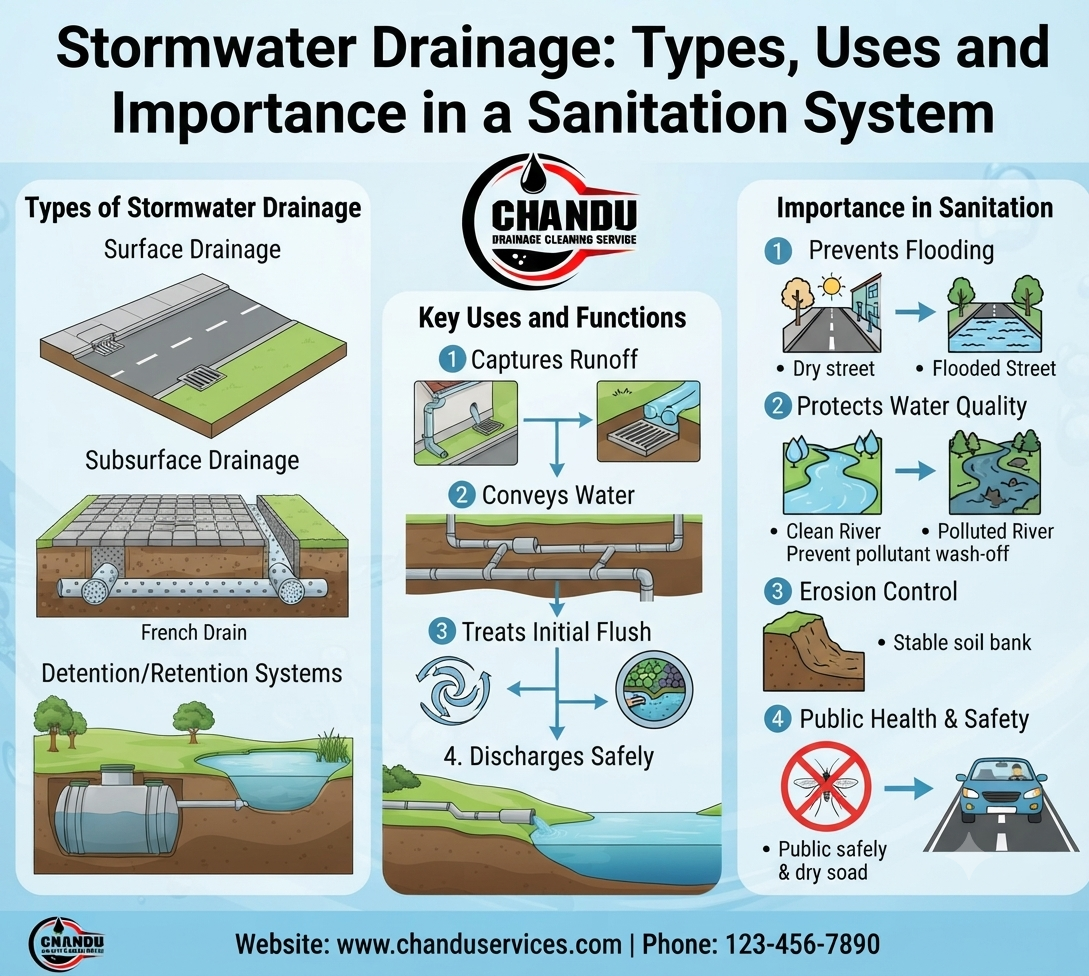
Stormwater drainage deals with the removal of water from roads, buildings, parking lots, and other surfaces after rainfall. Since water is not absorbed underground like in the natural environment, artificial drainage helps in removing this excess water. Drainage systems include roadside drains, surface drains, underground pipes, catch basins, drainage chambers, grilles, and culverts among others.
The importance of stormwater drainage
Improperly handled water from rainfall can cause many problems.
It prevents waterlogging
Drainage systems prevent water stagnation in roads, driveways, and on a person’s property.
It prevents flooding
When there is heavy rainfall, proper drainage can prevent water from overflowing on roads, buildings, and other structures causing damage.
It protects buildings
Rainwater that accumulates around the foundation of a building would cause damage to the building.
It reduces health hazards
Water stagnation on roads and other surfaces is unhealthy and attracts insects.
Water accumulation is also hazardous to vehicles.
Types of drainage systems
Drainage can be classified according to their use, location, and whether they are on the surface or underground.
Surface drainage
This involves draining water on the surface of the ground like that on roadways, yards, and other places. Surface water can be drained off through simple channels.
Underground drainage or sub surface drainage
This type of drainage involves draining water underground using underground pipes. It is important to ensure that the pipes are not blocked since it may be difficult to access them in case of a blockage.
Stormwater drainage
This involves the removal of water from buildings, roads, and other structures.
Drainage systems include roadside drains, surface drains, underground pipes, catch basins, drainage chambers, grilles, and culverts among others.
Sanitary drainage
This involves removing wastewater which comes from toilets, drains, and other wastewater sources.
Sanitary drainage is used in homes, businesses, and other places.
Unlike stormwater drainage, sanitary drainage carries wastewater containing impurities.
What is a corrugated drain?
A corrugated drain is a corrugated pipe used in carrying water from one point to another. They are available in different sizes and materials depending on their use.
The corrugated pipe has ridges on its surface and is used for many different drainage applications including stormwater management, surface water drainage and underground drainage.
Drain pipes should have proper slope to ensure that water flows freely.
It is important that people seek the advice of professionals when purchasing drainage pipes especially for large scale projects since the pipes should be able to withstand pressure.
Difference between stormwater drainage and sanitation system
The table below shows the differences between storm water drainage and sanitation systems.
| Feature | Stormwater Drainage | Sanitation System |
| Main purpose | Manage rainwater | Remove wastewater |
| Main source | Rainfall and surface runoff | Toilets, kitchens and bathrooms |
| Typical contents | Relatively clean rainwater and debris | Wastewater and contaminants |
| Common components | Channels, grates and storm drains | Sewer pipes and chambers |
| Maintenance | Debris and sediment removal | Blockage and wastewater management |
Since the two systems carry different water, it is important to ensure that each is well maintained. Mixing of the two can be unhealthy.
How blockages affect drainage
A drainage system can only serve its intended purpose if its pipes and chamber are free from blockages.
When a drain is blocked, water may come back instead of flowing downwards.
In stormwater drains, blockages such as leaves, soil, plastic and deposits may cause water to stagnate in some drains.
In sanitation systems, deposits such as fat, hair, wipes, and other substances can also cause blockages.
Some signs of drainage problems include:
- Slow draining
- Stagnation of water
- Water backing up
- Foul odours
- Dirty drainage chamber
- Gurgling sound
- Overflowing drainage chamber
Ignoring the signs may lead to serious drainage problems.
Importance of regular maintenance
Maintenance is important as it helps detect drainage problems at an early stage.
Periodic maintenance ensures that the drainage system is free from blockages and also detects problems in the drainage system.
Stormwater drainage maintenance should be done before and after the rainy seasons.
It is important to remove leaves, deposits, and other substances that may cause blockages especially since blocked drains may result in water stagnation during the rainy seasons.
For residential and commercial properties, it is important to do regular maintenance to remove deposits which can cause blockages.
How to maintain a drainage system
There are several ways of maintaining a drainage system including:
Ensuring that the openings of the drainage pipes are free from leaves, plastics, and dirt.
This will prevent water from running slowly and water stagnation.
Avoid dumping grease down the drain.
Avoiding disposal of cooking oil and other substances that can cause blockages is important to prevent serious drainage problems.
Checking drains for blockages
It is important to inspect drainage systems for blockages and remove them.
Addressing slow drainage
It is important to detect drainage problems at an early stage.
Do not wait until the drains are completely blocked.
Seeking professional help with drainage cleaning and inspection helps a lot in detecting serious drainage problems.
When should you call a drainage cleaning professional?
Some drainage problems can be handled by simple maintenance. However some drainage problems may persist even after simple maintenance. In such cases, it is important to seek the assistance of a drainage cleaning contractor.
Drainage cleaning contractors should be contacted in case of persistent drainage problems.
For persistent wastewater blockages, foul odours or overflowing sewage lines, professional sewage cleaning services can help restore proper drainage and maintain a hygienic environment.
Persistent drainage problems include:
- Blockages
- Overflowing drainage chamber
- Water backflow
- Unpleasant odours from drains
- Water stagnation
- Poor drainage
Professional drainage cleaning contractors can help detect the cause of drainage problems. They can also help clear blocked drains.
Professional drainage contractors can also help inspect drainage systems to look for cracks or defects in the drainage pipes.
Why proper drainage is important in sanitation
The importance of a good sanitation system cannot be underestimated.
A good sanitation system ensures that wastewater is properly disposed of.
A good sanitation system requires that drainage systems are properly maintained.
This helps in avoiding water stagnation and water pollution.
Conclusion
A drainage system plays an essential role in removing rainwater and wastewater. Stormwater drainage is important in preventing water from accumulating on roads, driveway, and other surfaces. Sanitation systems ensure that wastewater is removed from homes and businesses. It is important for people to understand the various aspects of drainage so that they are able to know how to maintain drainage systems. Most importantly, people should not ignore drainage problems but rather address them at an early stage.
Frequently Asked Questions
1. What is stormwater drainage?
Stormwater drainage removes water from buildings, roads, parking lots, and other places.
2. What is the purpose of a drain?
Drainage helps in carrying away excess water or wastewater from drains, channels, or pipes.
3. What is a corrugated drain?
A corrugated drain is a corrugated pipe used in various drainage applications.
4. How does stormwater drainage prevent waterlogging?
Stormwater drainage helps prevent waterlogging by removing water from roads, driveways, and other surfaces.
5. What causes drainage blockages?
Drainage blockages can be caused by leaves, deposits, plastics, and other substances.
6. How often should drainage systems be cleaned?
Drainage cleaning depends on the type of drainage system and the amount of deposits in the drainage system.
If a drainage system is regularly blocked, it is important to clean it more frequently.
7. What are the signs of a blocked drain?
Signs of a drainage blockage include slow drainage, water stagnation, foul smell, overflowing drainage chamber, gurgling sound, and water backing up.
8. Why is a sanitation system important?
A sanitation system is important in removing wastewater from homes and businesses.
Keep your drainage system free from blockages
Do you have a drainage problem? Contact Chandu drainage cleaning for drainage cleaning and maintenance to keep your drainage system free from blockages and keep your property drains clean.